
Viennese Onion Roast Beef: Juicy & tender, just like at the tavern
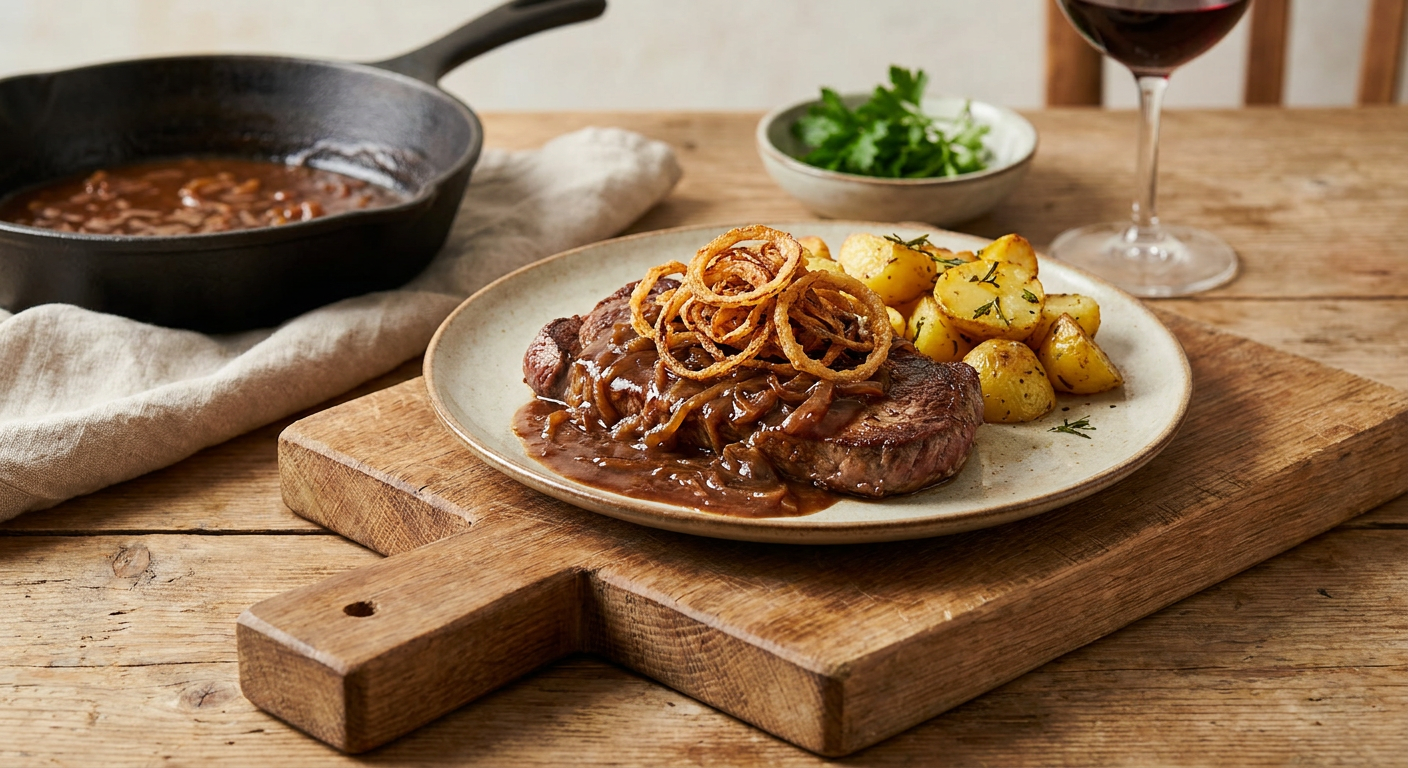
When the cast-iron pan sizzles in a Viennese tavern and the aroma of caramelised onions, piquant mustard, and freshly seared beef fills the dining room, every connoisseur's heart beats faster. A masterfully prepared Viennese Zwiebelrostbraten unites contrasting textures into pure harmony: tender, juicy beef, a velvety reduced natural jus rich in savoury flavour, and crowned with an abundant mound of feather-light, golden-brown crispy fried onions with an unbeatable crunch factor.
The Meat: Why the Cut Determines Juiciness
The success of a traditional Viennese Zwiebelrostbraten begins at the butcher's block. In Austrian beef culture, two classic cuts have proven ideal for this dish: classic Rostbraten (ribeye / rib roast) and Beiried (striploin / sirloin). Both cuts offer distinct advantages, but demand precise preparation.
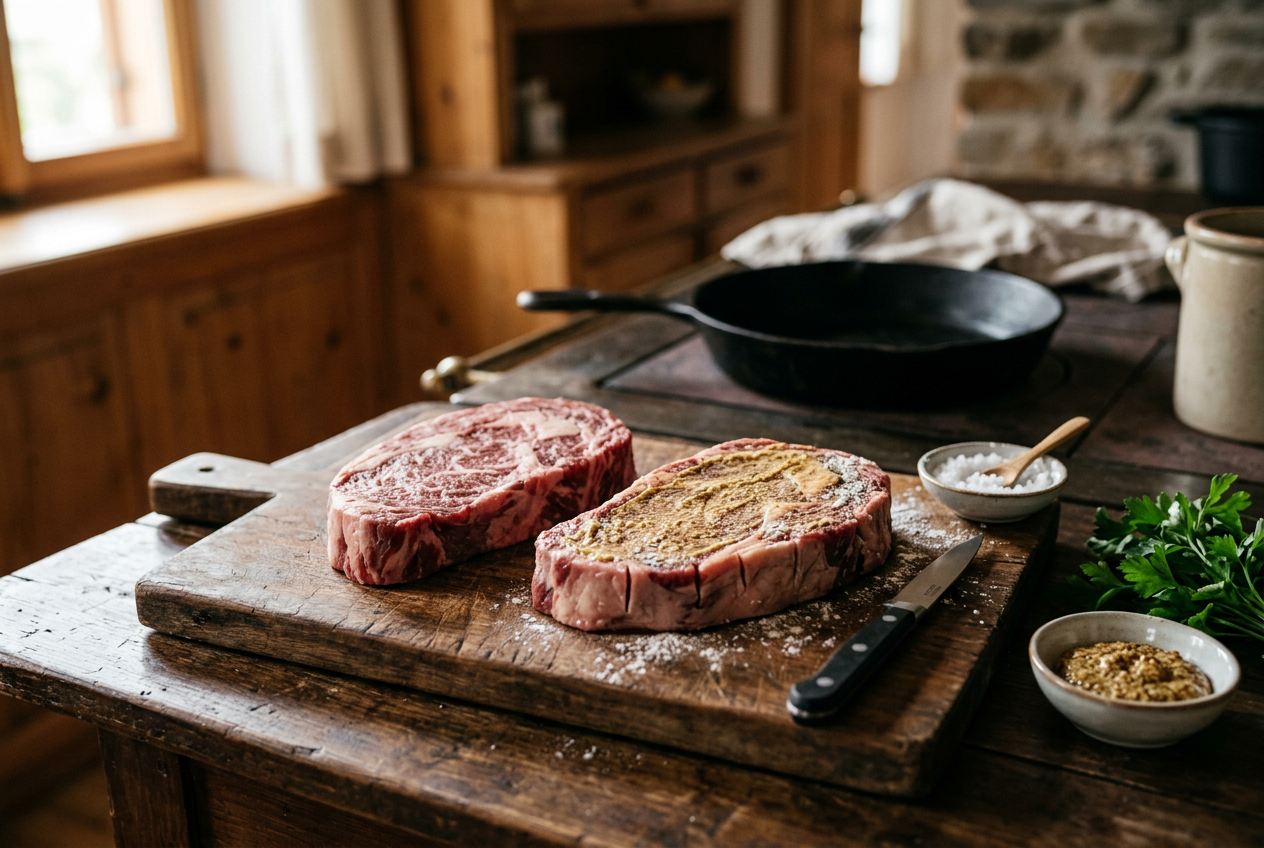
The Rostbraten cut comes from the upper rib section and features fine-grained marbling. Its characteristic eye of fat melts gently during braising, lending incomparable depth and richness to the cooking juices. If you prefer leaner, more uniform meat, opt for the Beiried: with the right braising time, it stays wonderfully juicy and maintains a firm yet beautifully tender texture.
Before going into the pan, one essential rule of the craft must be followed: take the meat out of the fridge at least 30 minutes before cooking. Next, make shallow cuts along the tough outer sinew border with a sharp knife at intervals of about 2 to 3 centimetres. If you skip this, the sinew will contract sharply over high heat, causing the meat to curl up into a cup shape and prevent even contact with the pan.
The steaks should only be levelled gently with the heel of your hand or a flat meat pounder—never pounded with a spiked mallet. Then comes the Viennese seasoning step: coat one side generously with tangy, spicy tarragon mustard, then dust it with a whisper-thin layer of fine flour. This combination locks in the meat juices and immediately forms golden, flavourful browned crust in the hot fat.
Pro Tips for Preparation
- Room temperature is a must: Cold beef lowers the temperature of the hot fat, loses moisture, and ends up boiling instead of searing properly.
- Mustard acidity as a tenderiser: The mild acidity in tarragon mustard starts tenderising the meat fibres even during the brief waiting time.
- Dust with flour on one side only: The floured side goes into the hot lard first, binding the escaping juices and creating the foundation for the pan sauce later on.

 Sliced roast beef



Crispy Fried Onions: The Secret Formula for Feather-Light Crispiness
Forget pre-packaged, greasy fried onions from a can. An authentic Viennese Zwiebelrostbraten calls for freshly fried, paper-thin onion ribbons that melt in your mouth with a delicate crunch. The secret lies in the exact slicing thickness, the right coating of flour, and perfect temperature control during frying.
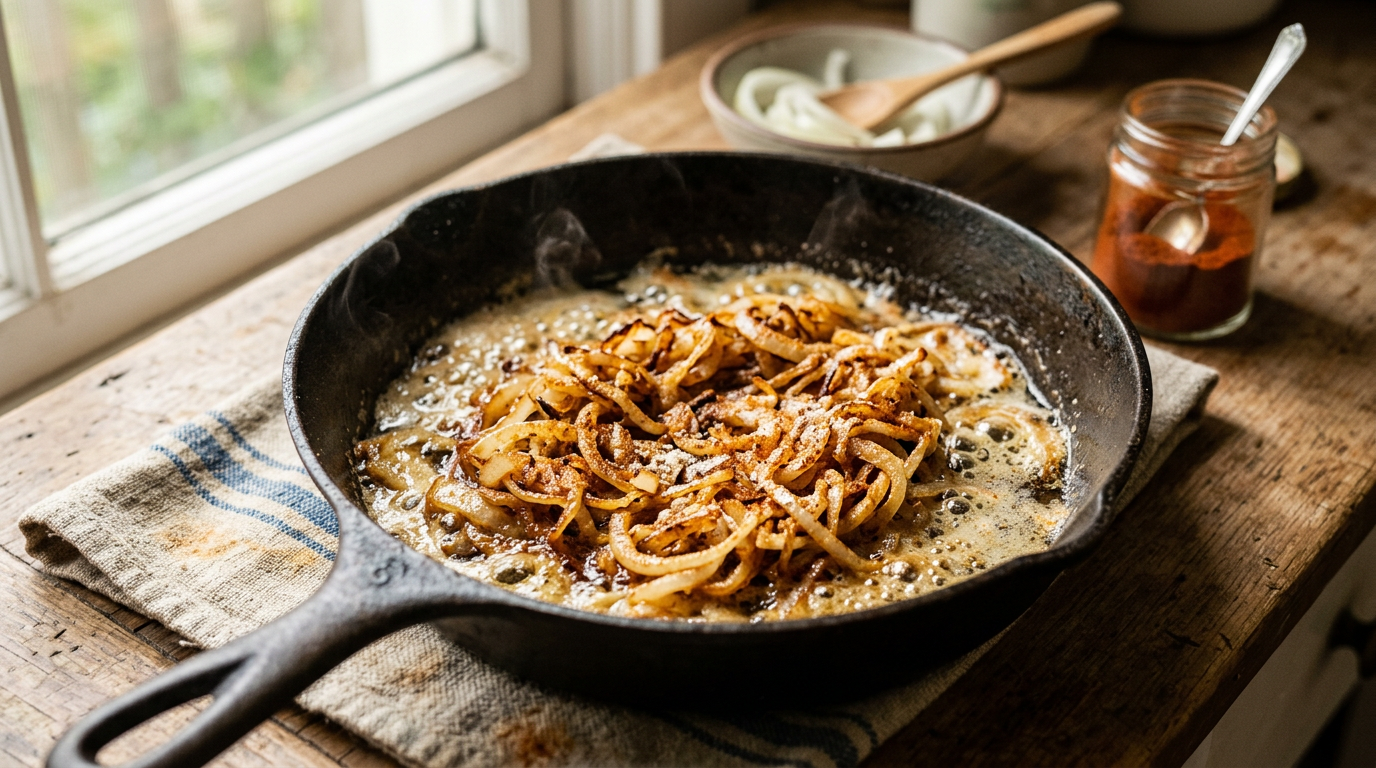
For the perfect crispy fried onions, robust yellow cooking onions are ideal. They are peeled, halved, and sliced on a mandoline into uniform half-rings about 1.5 to 2 millimeters thin. If sliced unevenly, you risk the thinner parts burning while the thicker rings stay tough and moist.
Now comes the crucial trick of Viennese master chefs: The onion rings are tossed in a bowl with coarse or smooth flour and a level teaspoon of sweet paprika. The flour immediately absorbs the escaping onion juice and forms a microscopically thin, crispy crust during frying. The paprika powder not only adds a mild seasoning, but also gives the onions their inimitable reddish-golden color.
Before frying, shake the onions thoroughly in a coarse sieve to remove excess flour. If too much loose flour gets into the hot oil, it will burn at the bottom of the pan and make the cooking fat bitter.


Sauce Base & Braising: How the Pan Juices Gain Their Legendary Depth
The difference between an average tavern dish and true culinary mastery manifests in the pan juices. An authentic Viennese Zwiebelrostbraten is a classic "braised beef steak": the meat is seared quickly over high heat and then braised gently in a dark, reduced onion base until the muscle fibres yield butter-tender.
Hot Searing in Clarified Butter
In a heavy pan, heat plenty of clarified butter over high heat. Place the steaks in, floured mustard side down first, and sear them over high heat for 90 seconds. Turn over, sear the other side briefly as well, and immediately transfer the meat to a warm plate. Important: Do not cook through; the meat should remain raw on the inside!
Onion Base & Deglazing the Fond
In the remaining cooking fat, sauté a finely diced onion until golden brown. It absorbs the caramelised meat and mustard residues from the bottom of the pan. As soon as the onions shine a deep amber colour, deglaze with a splash of dry white wine or directly with rich beef broth. Using a wooden spoon, carefully scrape up all the delicious browned bits from the bottom.
Gentle Braising for Tender Meat
Now place the seared steaks along with any released meat juices back into the gently simmering sauce. Put the lid on, reduce the heat to the lowest setting, and let the meat braise gently for about 15 to 20 minutes. In this steam bath, the muscle tissue relaxes completely, while the flour on the meat gives the gravy a natural, velvety thickness.
Mounting with Ice-Cold Butter
Finally, remove the meat from the pan and keep it warm. Turn off the heat and whisk two tablespoons of ice-cold butter cubes into the hot, no longer boiling sauce. This creates a glossy sheen, gives the natural gravy a velvety finish, and harmoniously rounds off the subtle mustard note.
The Kitchen Myth About Cooking It Through
An authentic Viennese Zwiebelrostbraten is not a grilled steak served pink! The secret of this braised dish lies in achieving "melt-in-the-mouth tenderness": through the brief braising in aromatic pan juices, the connective tissue breaks down without drying out the meat. Every bite literally melts on the tongue.


