
Classic stuffed peppers in tomato sauce
The juicy filling: Minced meat, flavours & the right consistency
A dry, dense meatball inside the bell pepper is the most common mistake during preparation. To ensure the minced meat stays wonderfully tender and juicy, it all comes down to the right meat and a well-thought-out binder. A mixture of beef and pork provides the ideal balance of rich flavour and melt-in-the-mouth fat.
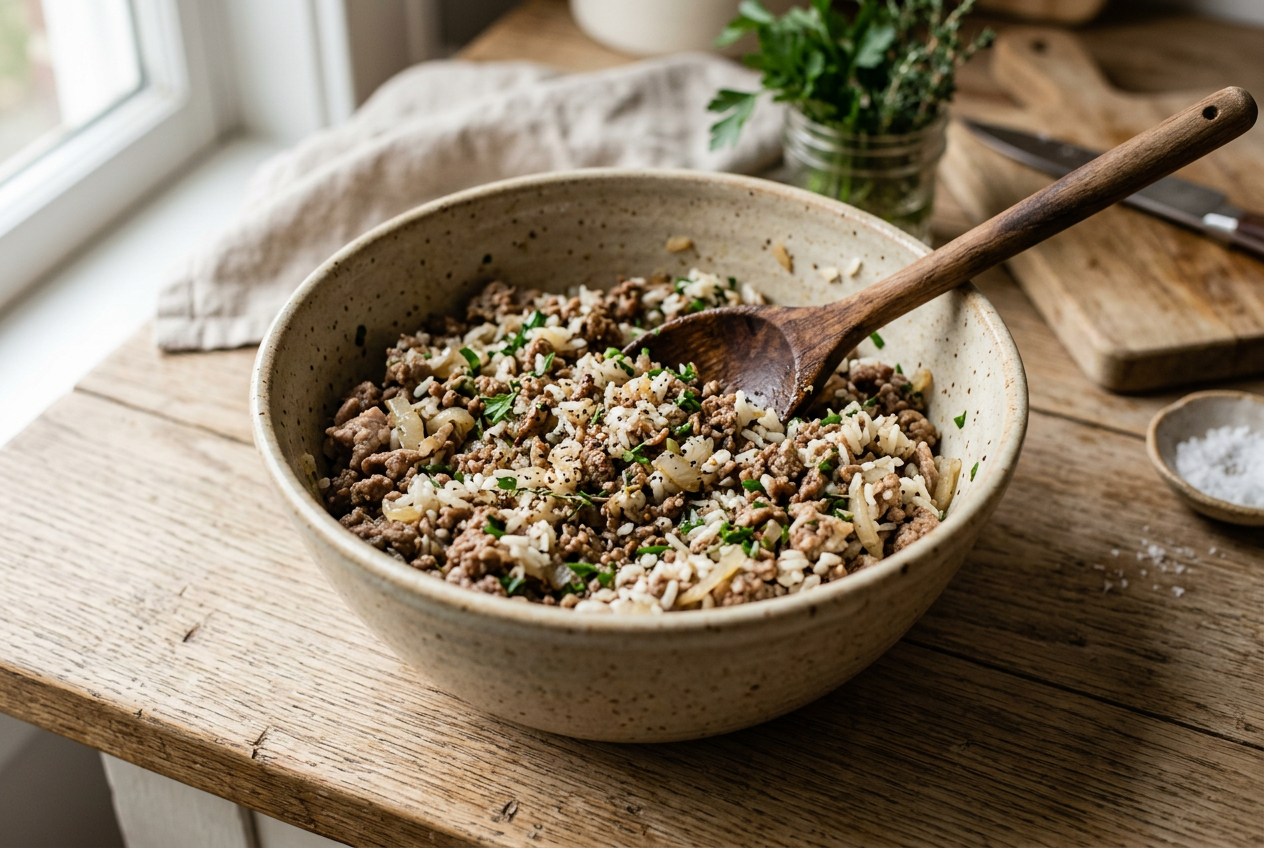
Pure minced beef has an intensely aromatic flavour, but can become compact with longer cooking times. Mixed minced meat stays wonderfully juicy thanks to the moderate fat content of the pork. Those who prefer a lighter option can opt for minced veal or a plant-based alternative. You can find fresh meat in our category Minced meat, burgers & more.
Finely chopped onions should definitely be sautéed in a little butter until translucent beforehand. Raw onions often do not cook through completely inside the dense meat core and leave behind an unpleasant pungency. Sautéing brings a gentle sweetness and harmonious depth to the filling.
A fresh egg, a finely grated garlic clove, sweet paprika, freshly ground caraway seeds, rubbed marjoram, and plenty of parsley create the unmistakable flavour profile. Salt and freshly ground black pepper round off the mixture.
When mixing the meat, add two to three tablespoons of cold water or cold beef broth. Gentle kneading allows the meat protein to bind the liquid. During the subsequent braising, this moisture evaporates inside the pepper and keeps the minced meat and rice mixture incomparably fluffy and juicy.

 BIO beef mince


The Rice Secret: Parboiling for the Perfect Binding
Rice plays just as important a role as meat in this traditional dish. It gives the filling its characteristic lightness and absorbs the flavorful meat juices inside the peppers as they braise. But which rice works best, and why should it never go into the mixture completely raw?
The Crucial Cooking Step: Parboiling
If you add raw rice to the meat mixture, it draws all the moisture out of the minced meat as it cooks. The result is a dry lump of meat and grains of rice that remain hard at their core. Fully cooked, soft rice, on the other hand, breaks down into mush in the braising pot. The golden rule: parboil the rice for about five to seven minutes in salted water, rinse it briefly with cold water, and drain it thoroughly before folding it into the meat.
Which Type of Rice Works Best?
Short-grain rice contains a lot of natural starch and ensures a particularly creamy, compact filling. Long-grain rice and parboiled rice, on the other hand, remain grainier and lighter in texture. Local Austrian paddy rice is also growing in popularity. You will find a wide selection in the Rice category.
The Perfect Ratio
A good rule of thumb is: for every 500 grams of minced meat, use about 80 to 100 grams of uncooked rice (which equals around 180 grams of parboiled rice). This allows the savory meat flavor to dominate, while the rice provides the popular fluffy texture. Too much rice makes the filling feel mealy, while too little rice makes it dense like a meatball.


The Tomato Sauce: Fruitiness, roux, and fine spices
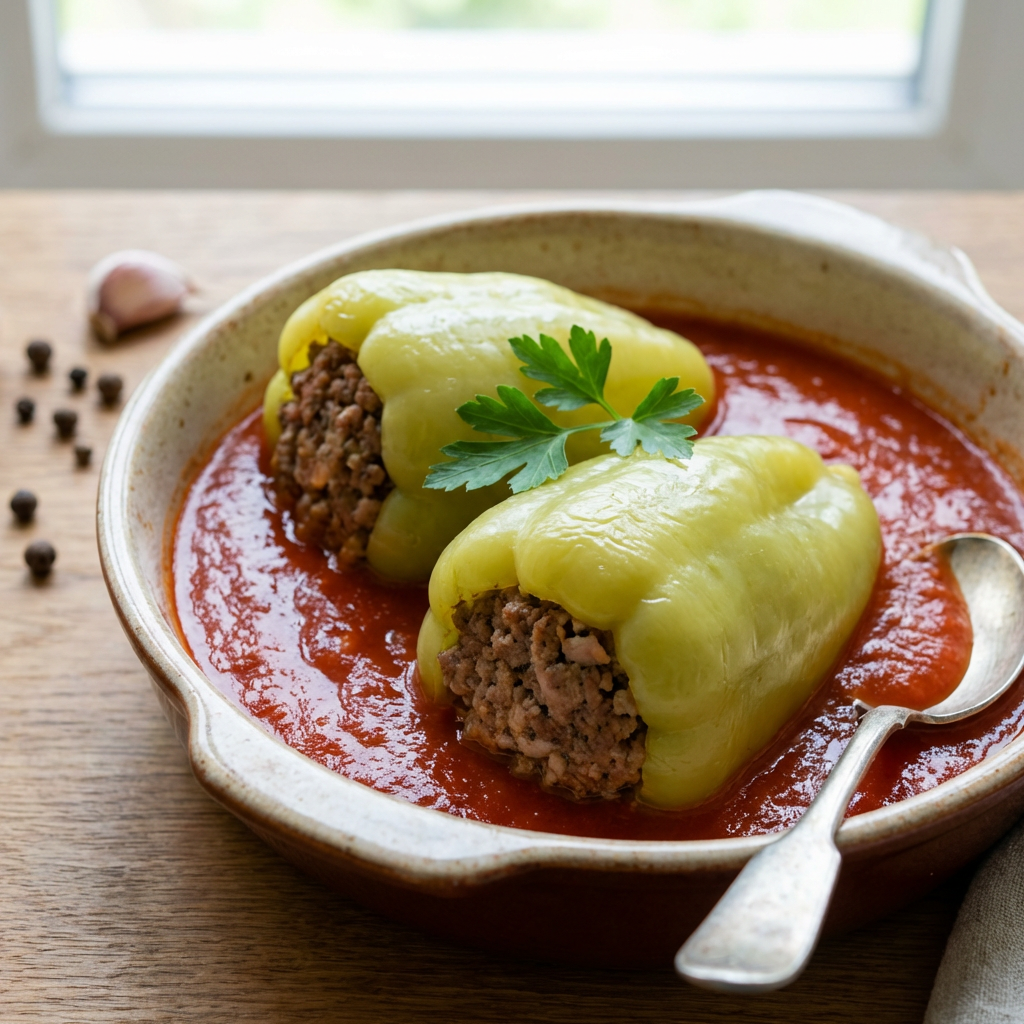
What would stuffed peppers be without their creamy, ruby-red sauce? In Austria, tomato sauce is not called Paradeisersauce for nothing: it is characterized by a delicate balance of sun-ripened fruitiness, a mild acidity, and a velvety thickness created by a gentle roux. It lovingly envelops the peppers as they simmer and is later spooned up to the very last drop.
The best base of sun-ripened tomatoes
An aromatic sauce calls for high-quality tomato products. A combination of smooth tomato passata and chopped tomatoes or a touch of tomato paste gives the sauce body and vibrant fruitiness. Discover top-quality options in the Tomatoes & Passata category.
The Viennese roux for velvety thickness
Traditionally, tomato sauce starts with a light roux: melt butter in a pot, stir in all-purpose flour, and gently cook while stirring constantly without letting the flour brown. Then, pour in cold beef broth or vegetable stock along with the strained tomatoes and whisk until smooth.
Spices, bay leaf & a pinch of sugar
A bay leaf, two allspice berries, and a little thyme can gently simmer in the sauce. The indispensable secret of Austrian cuisine is a teaspoon of sugar: it perfectly balances the natural acidity of the tomatoes and brings out their sweet inherent flavour.


Step by step: Braising in a pot or baking in the oven
When preparing them, you have two proven methods to choose from: traditional braising on the stovetop or easy cooking in the oven. Both paths lead to tender peppers and a rich sauce, but differ in their roasted notes and required effort.
Loosely fill the peppers
Loosely fill the prepared meat-and-rice mixture into the cleaned peppers using your fingers or a tablespoon. Do not press the filling in too tightly, as the rice will swell further during cooking. Leave about one centimeter of space at the top edge and replace the cut-off pepper tops.
Sear carefully
Heat a little clarified butter or oil in a wide braising pot. Sear the filled peppers briefly and carefully on all sides over medium heat. The light browned spots on the skin significantly deepen the flavor of the peppers and the sauce later on.
Braise in tomato sauce
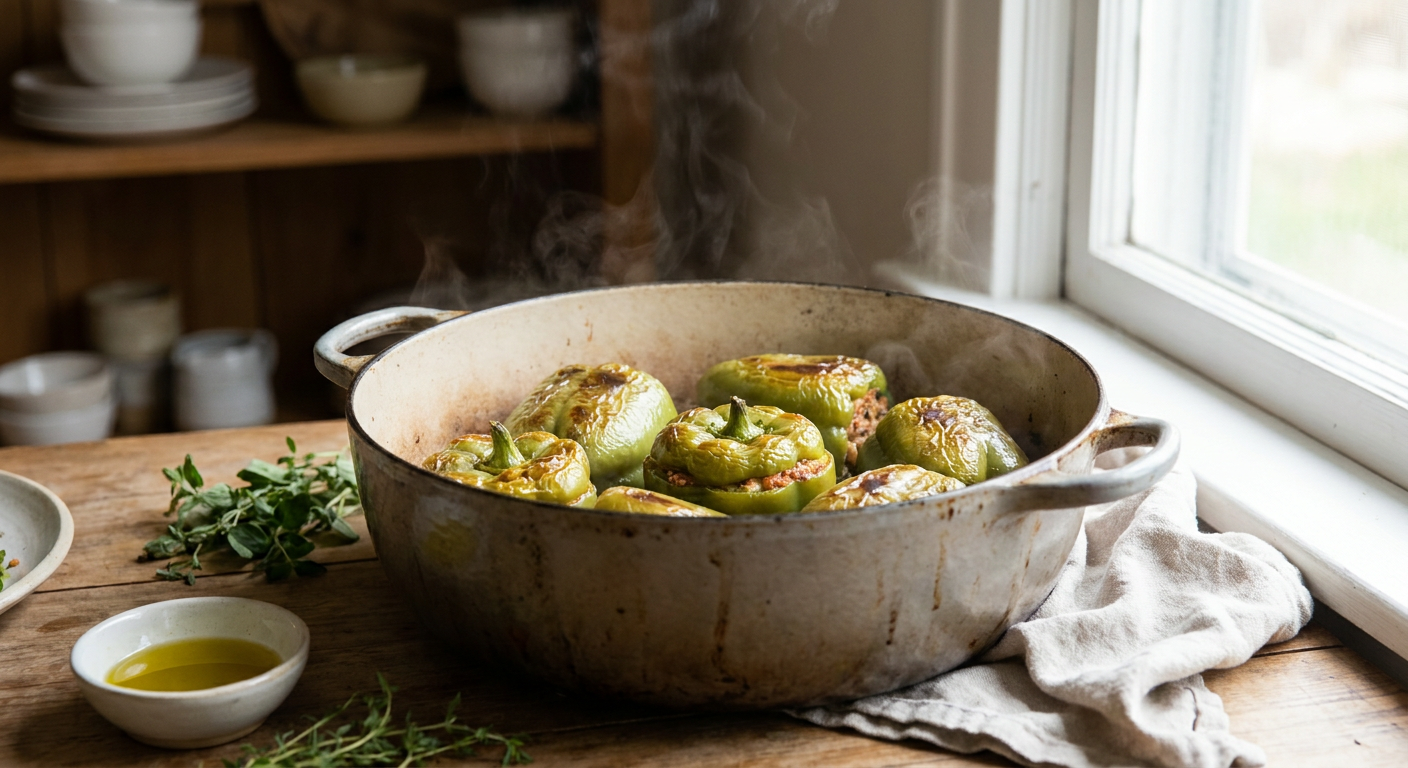
Pour in the tomato sauce so that the peppers are about two-thirds submerged in the liquid. Add the bay leaf and allspice, place the lid on the pot, and let everything simmer gently over low heat for about 40 to 45 minutes. Gently turn the peppers halfway through cooking.
Season and finish the sauce
Carefully remove the tender peppers from the sauce and keep them warm. Season the tomato sauce once more with salt, pepper, and a pinch of sugar. If you like, stir in a small spoonful of cold butter or a dash of whipping cream at the end to give the sauce a silky sheen.
The oven alternative for fans of extra crispiness
If you want to keep your stovetop free, simply cook the stuffed peppers in the oven. Place the seared peppers side by side in an ovenproof baking dish, pour the tomato sauce over them, and place the dish in the oven at 180 degrees top and bottom heat for about 45 minutes. Due to the circulating heat, the pepper skin will caramelize slightly in places, which many gourmets particularly enjoy.