
Creamy Chanterelle Risotto
When the scent of fresh wild mushrooms drifts through local forests in late summer and early autumn, the best time of year begins for gourmets. Creamy chanterelle risotto is one of the absolute finest dishes of Alpine cuisine. It combines velvety Italian risotto rice with the distinctive, nutty, and slightly peppery aroma of fresh chanterelles. In this detailed guide, you will learn step-by-step how to make the perfect risotto at home, just like in a gourmet restaurant. You can order your fresh mushrooms directly from Gurkerl and have top-quality ingredients delivered conveniently and chilled right to your doorstep.
1. The Gold of the Forest: How to properly clean & prepare chanterelles
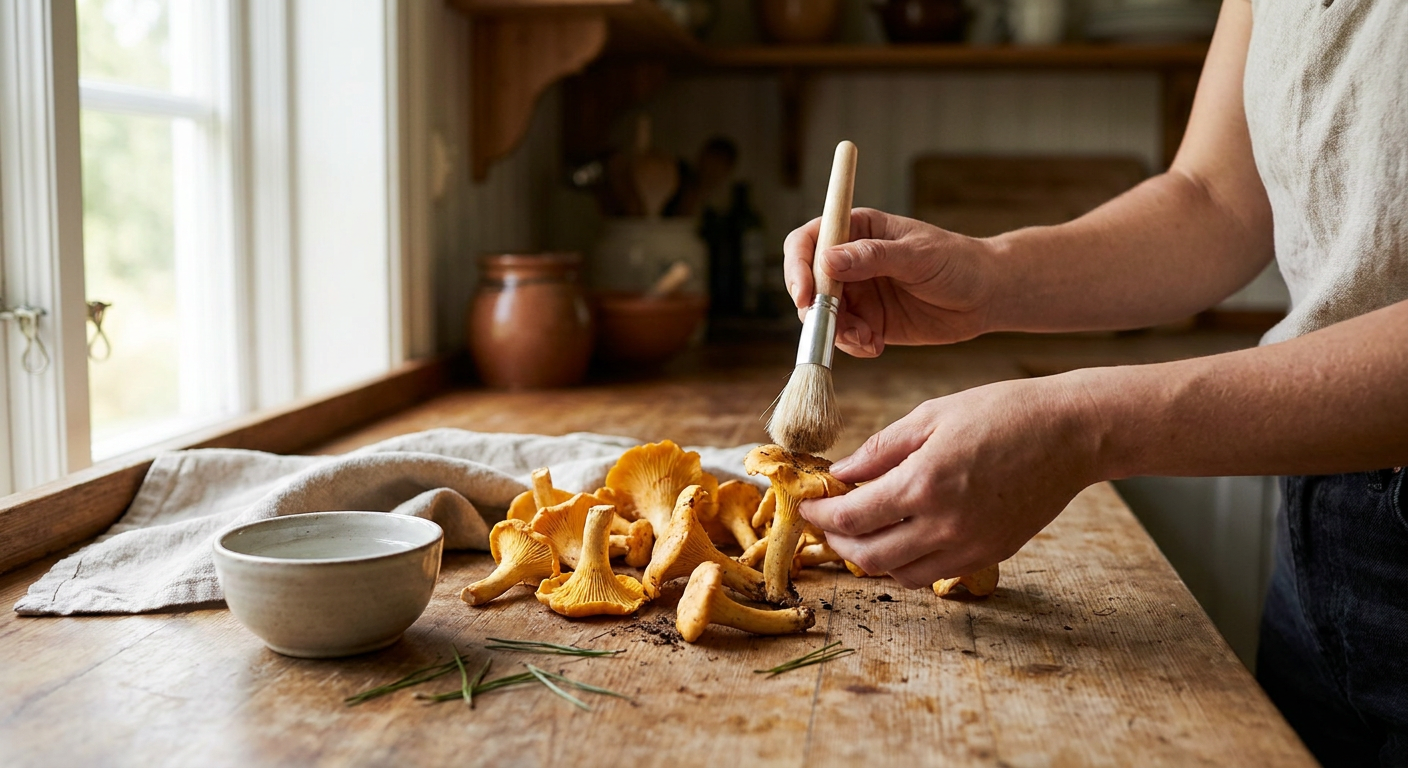
Preparing a stunning chanterelle risotto begins long before the actual cooking: namely with the proper handling of the mushrooms. Chanterelles (known in Germany as Pfifferlinge) have fine gills and ridges beneath the cap where fine forest soil, pine needles, or sand settle. The golden rule of all experienced chefs is crystal clear here: Water is the greatest enemy of fresh wild mushrooms!
Wild mushrooms act like little kitchen sponges. As soon as you place them in standing water or rinse them under running water, they soak it up in seconds. During subsequent searing in the pan, disaster strikes: The mushrooms no longer brown, but boil in their own water, become tough as rubber, and lose their unique aroma. With these four professional steps, your preparation will be absolutely flawless:
Brush dry
Use a special mushroom brush or a dry paper towel. Gently clean each mushroom of visible soil and moss residue.
Trim the stems
Only sparingly trim off the very bottom dried ends of the stems. Tear large mushrooms lengthwise into bite-sized pieces with your fingers.
The flour bath trick
For heavy dirt: Briefly swirl the mushrooms in cold water with 1 tbsp of flour. The flour binds the sand like a magnet.
Sear on high heat
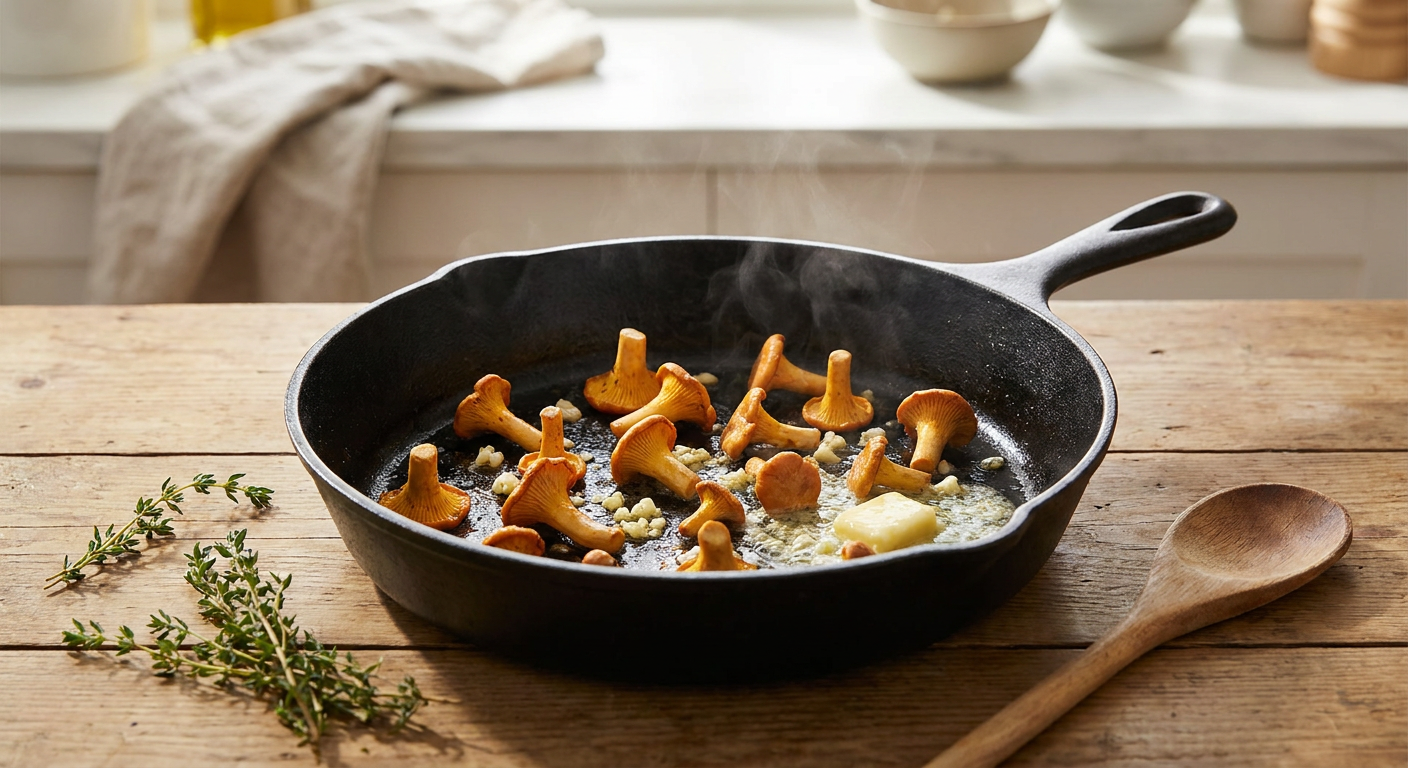
Sauté the mushrooms in hot butter. Only add salt right at the very end so the mushrooms do not release their moisture.
An important pro tip for storage: If you are not preparing the mushrooms until the next day, keep them unwashed in an open paper bag or a shallow bowl in the refrigerator. Plastic wrap prevents air circulation and causes the mushrooms to sweat. By the way, you can set cleaned and seared mushrooms aside: They are only stirred back into the risotto right at the end before serving, preserving their full aroma.



2. The perfect rice & the secret to true creaminess
A great risotto stands and falls with the choice of rice variety. Long-grain rice such as Basmati or Jasmine is not suitable for risotto, as it releases hardly any starch and cooks up dry and loose. For the desired velvety texture, you need Italian short-grain rice with a high starch content. You will find an excellent selection of suitable varieties in our risotto rice selection at Gurkerl.
An overview of the two most popular classics: Arborio is probably the most famous risotto rice. Its grains are slightly softer and release a particularly high amount of starch into the liquid during cooking. This effortlessly creates a rich, creamy sauce. Carnaroli is often considered by Italian gourmet chefs to be the absolute best risotto rice. It has a firm grain, retains its bite (al dente) remarkably well when cooked, and at the same time absorbs the flavors of wine and broth wonderfully.
The 3 golden laws of risotto physics
1. Never rinse: Never rinse risotto rice before cooking! The water would wash away the delicate layer of starch on the surface of the grains, which you need for that rich, creamy texture.
2. Gentle toasting (Tostatura): The dry rice grains are briefly sautéed in a little hot butter or olive oil together with finely chopped shallots. As soon as the edges of the grains become translucent and smell nutty, it's the ideal moment to deglaze.
3. Use boiling hot broth: Keep your vegetable or chicken broth constantly at boiling point in a side pot on low heat. If you pour cold broth into the rice, the pan cools down abruptly. This interrupts the cooking process and makes the outside of the rice grains mealy, while the core remains hard.
By regularly and gently stirring with a wooden spoon, the rice grains lightly rub against each other. As a result, the starch is continuously released and emulsifies with the hot broth and fat into a creamy sauce that perfectly coats the rice.


 DOCH! BIOVegetable Seasoning
3. Step by step: The recipe for perfect chanterelle risotto
For 4 hungry people you will need the following quantities: 300 g fresh chanterelles, 250 g Kitchin Arborio risotto rice, 2 fine shallots, 1 small clove of garlic, 100 ml dry white wine (for example an Austrian Pinot Blanc), approx. 900 ml hot vegetable stock, 60 g cold butter in cubes, 60 g freshly grated Parmigiano Reggiano, fresh flat-leaf parsley, salt and freshly ground black pepper.
Gently sauté the shallots
Finely dice the shallots and garlic. Sauté in a wide pot or deep pan with 1 tbsp of butter over medium heat until translucent. They should soften, but not brown.
Toast the rice & deglaze with white wine
Add the dry Arborio rice and toast for approx. 2 minutes until all grains are coated in a light film of fat. Deglaze with the white wine and allow to reduce completely while stirring, until the smell of alcohol has evaporated.
Add stock ladle by ladle
Now the classic risotto ritual begins: Add one ladle of boiling hot vegetable stock to the rice at a time. Stir gently and only add the next ladle once the liquid has been largely absorbed (duration: approx. 18-20 minutes).
Gently fold in the mushrooms
About 3-4 minutes before the end of the cooking time, mix the previously sautéed chanterelles along with any mushroom juices that released while resting into the risotto. This allows the mushrooms to warm up gently and combine their flavor with the rice.
The Mantecatura: The creamy finish
Remove the pot from the heat now! This is crucial: The following ingredients must not boil anymore. Add the ice-cold butter cubes and the grated Parmesan. Swirl the pot vigorously or stir briskly, place the lid on top, and let the risotto rest for 2 minutes.
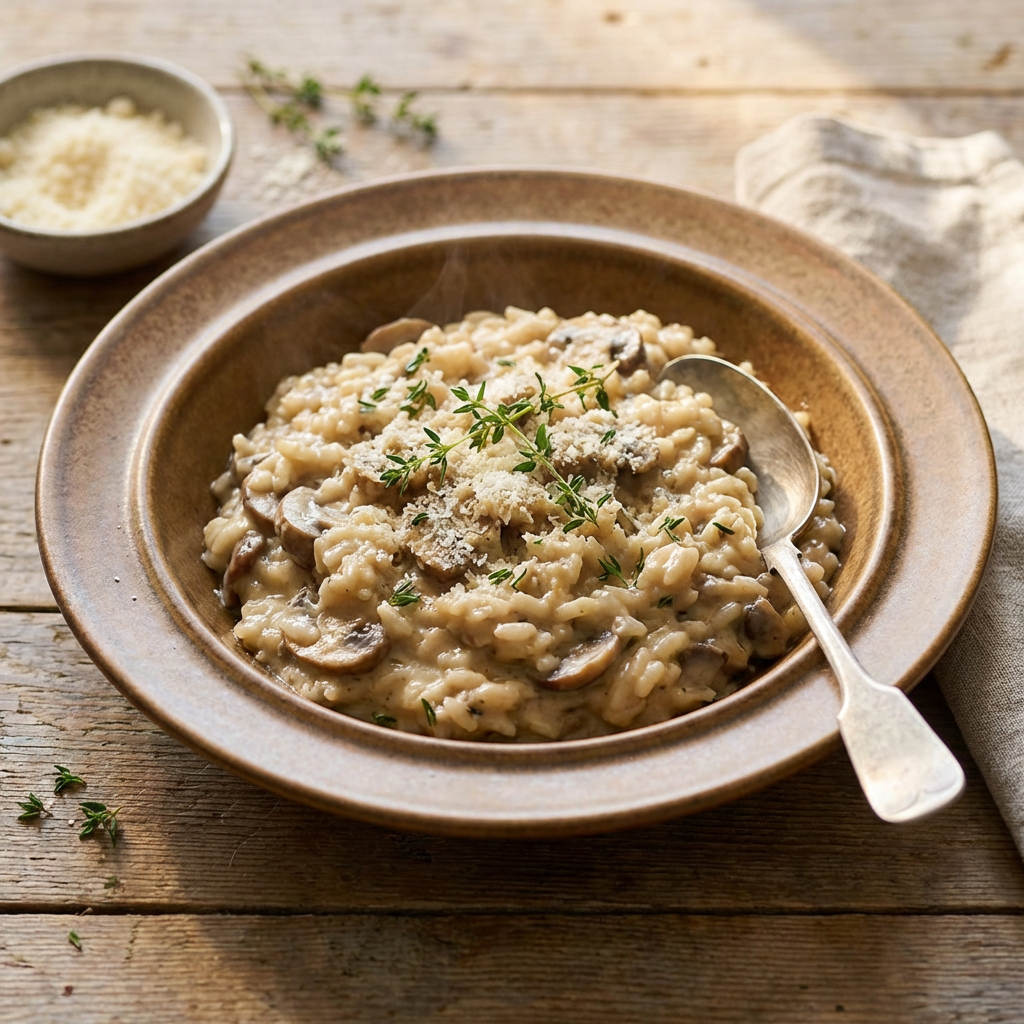
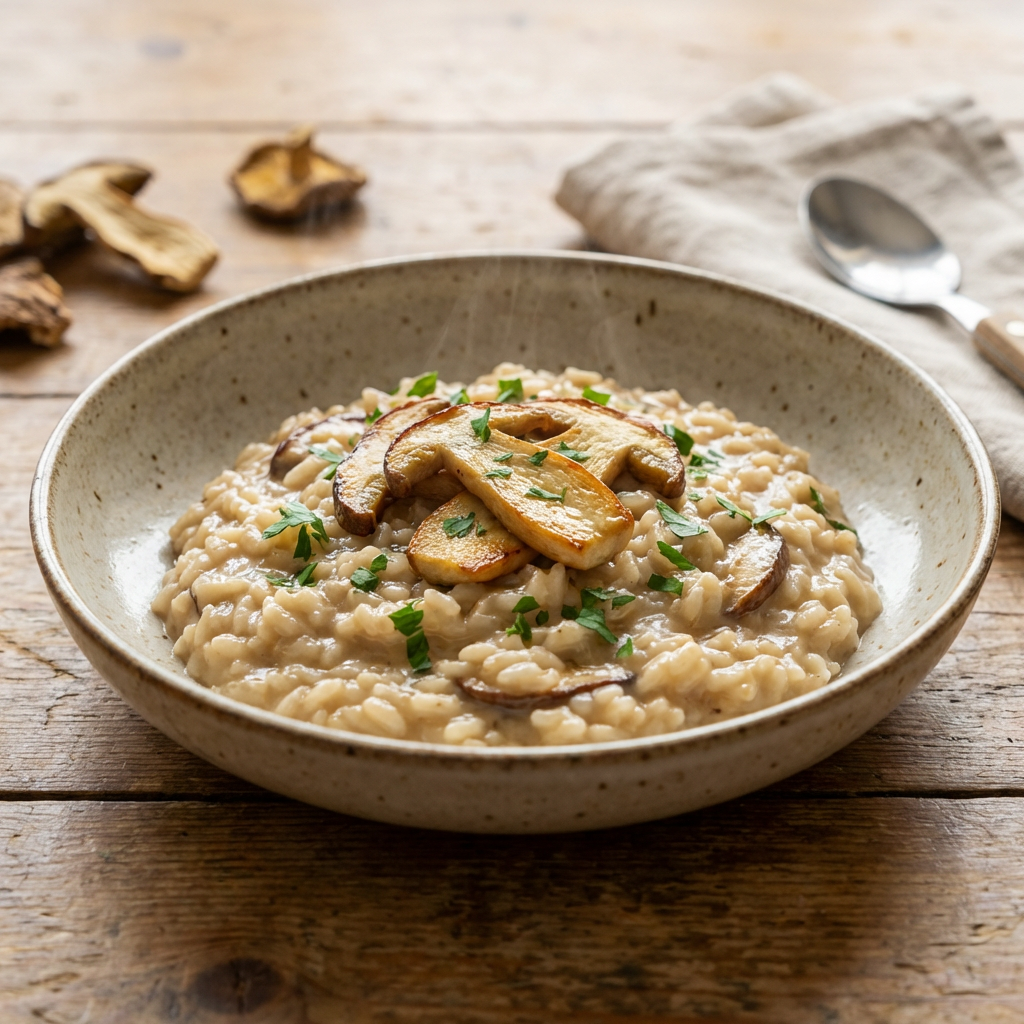
Serve the risotto immediately on warmed deep plates. Garnish each portion with freshly chopped flat-leaf parsley and, if desired, extra freshly shaved Parmesan.



4. Sophisticated variations & the perfect wine pairing
The basic recipe is a dream, but can easily be adapted depending on the occasion and personal preference. Whether you want to present a Styrian specialty to your guests or prefer a hearty, savory variation: here are four excellent ideas for your kitchen.
Styrian pumpkin seed twist
Garnish the plated risotto with pan-roasted, crispy pumpkin seeds and drizzle a few drops of authentic Styrian pumpkin seed oil PGI over it just before serving. The dark, nutty note pairs perfectly with the earthy forest flavor of the chanterelles.
Hearty with Tyrolean bacon
Cut fine Tyrolean bacon or bacon into thin strips and fry them in a small pan without fat until crispy. Sprinkle the crispy bacon bits over the risotto as a topping. The smoky, salty note provides a fantastic contrast to the creaminess.
Creamy Gorgonzola variation
For lovers of bold cheese flavors: replace half of the Parmesan during the mantecatura stage with flavorful Gorgonzola Dolce or fine mountain cheese. The melting blue cheese gives the risotto an incomparable depth.
The right wine in your glass
A dry, structured white wine from Austria is recommended as the ideal accompaniment. An elegant Pinot Blanc from Wagram or a full-bodied Grüner Veltliner Reserve offers a fine acidity structure that perfectly balances the richness of the butter.
Try adding fresh herbs like finely chopped thyme or rosemary to the fat while sautéing the shallots. This allows the essential oils to unfold their full effect throughout the entire dish.
5. Pro tips & clever ways to use leftovers
To ensure your risotto turns out perfect every time, pay attention to the serving temperature. Risotto cools down extremely fast on cold plates and quickly loses its delicate texture. Warm your deep plates in the oven at approx. 60 degrees before serving.
Has your risotto reached the perfect consistency? Chefs test this with the plate-tilt test: The risotto should flow slowly across the plate like a gentle wave (Italian all'onda) when held at a slight angle. If it sits as a stiff clump, it is too dry: simply add another 2-3 tablespoons of hot broth or a small splash of whipping cream.
Fantastic snack: Crispy risotto arancini
If you happen to have any leftover risotto, don't throw it away under any circumstances! Once chilled in the fridge, risotto is wonderful to work with: shape walnut-sized balls from the cold mixture, press a small mozzarella ball into the center and seal it well. Roll the balls one by one in flour, beaten egg, and breadcrumbs. Then fry in hot vegetable oil until golden brown. This makes a sensational aperitif snack with a gooey cheese center!
We wish you every success, many delicious moments at the dining table, and a wonderful mushroom season! Enjoy your meal!