Baked Curd Cheese Pancakes: Viennese Original & Sour Cream Glaze
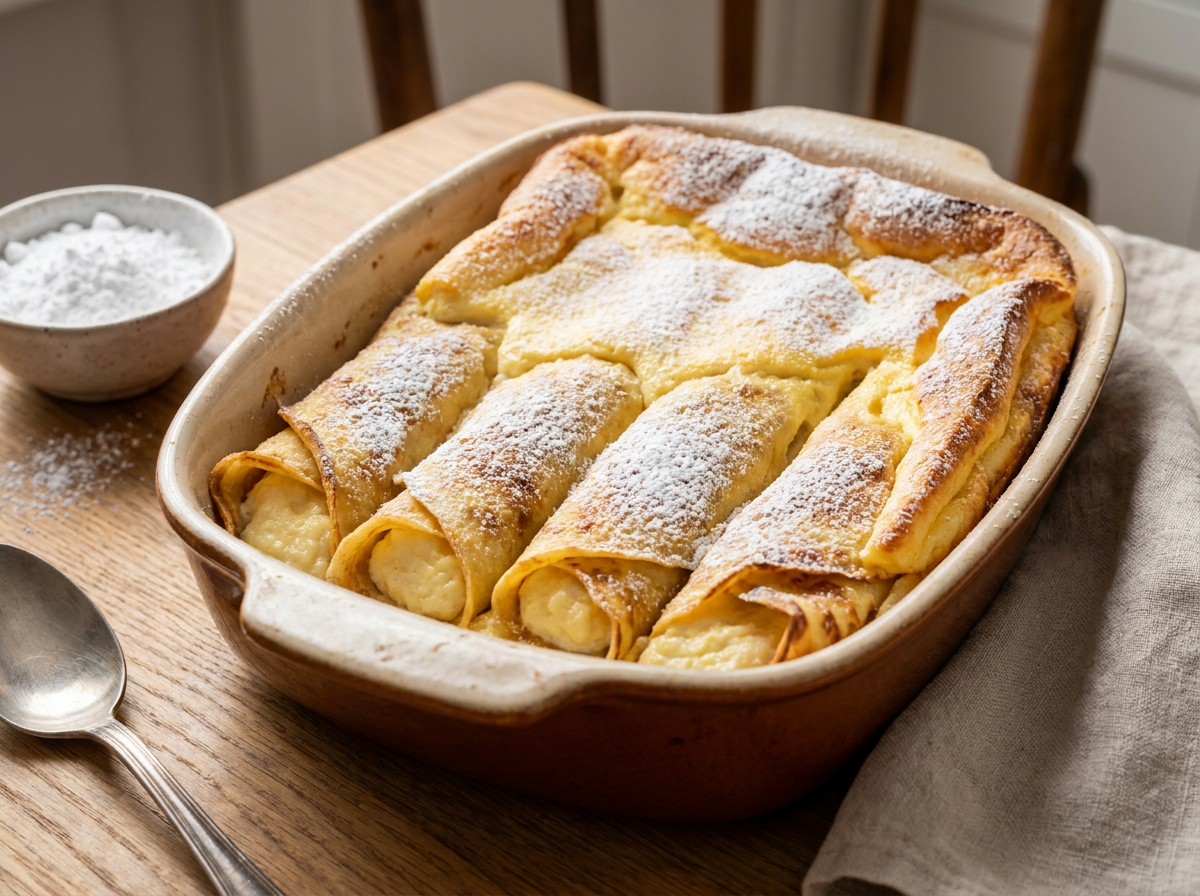
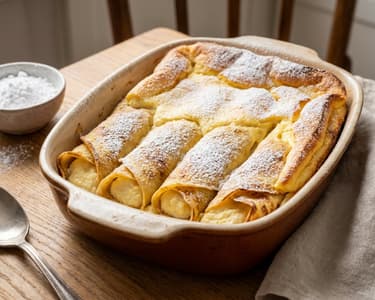
The enticing aroma of warm butter, grated lemon zest, and bourbon vanilla fills the kitchen as the baking dish bakes to a golden yellow in the oven. Baked curd cheese crêpes are the undisputed crown jewel of traditional Austrian inn and coffeehouse culture. Here you will find out in detail how to make the paper-thin crêpes, the luscious curd cheese filling, and the fluffy, souffléed cream custard turn out just like grandma's.
Let rest for at least 20 minutes so that the starch granules swell and the batter remains elastic.
The combination of 20 percent curd cheese and 40 percent farmhouse curd cheese provides juiciness and structure.
Stiffly whipped egg whites are gently folded in for incomparable fluffiness in the oven.
Sour cream, egg yolks, and vanilla bake into a souffléed, golden-brown crust.
The Secret to Tender Palatschinken: Resting the Batter, Binding, and the Pan
A baked Topfenpalatschinke stands or falls with the texture of its batter. It must neither be thick like an American pancake nor brittle like a dry galette. The goal is an elastic, tender pancake that effortlessly wraps around the filling.
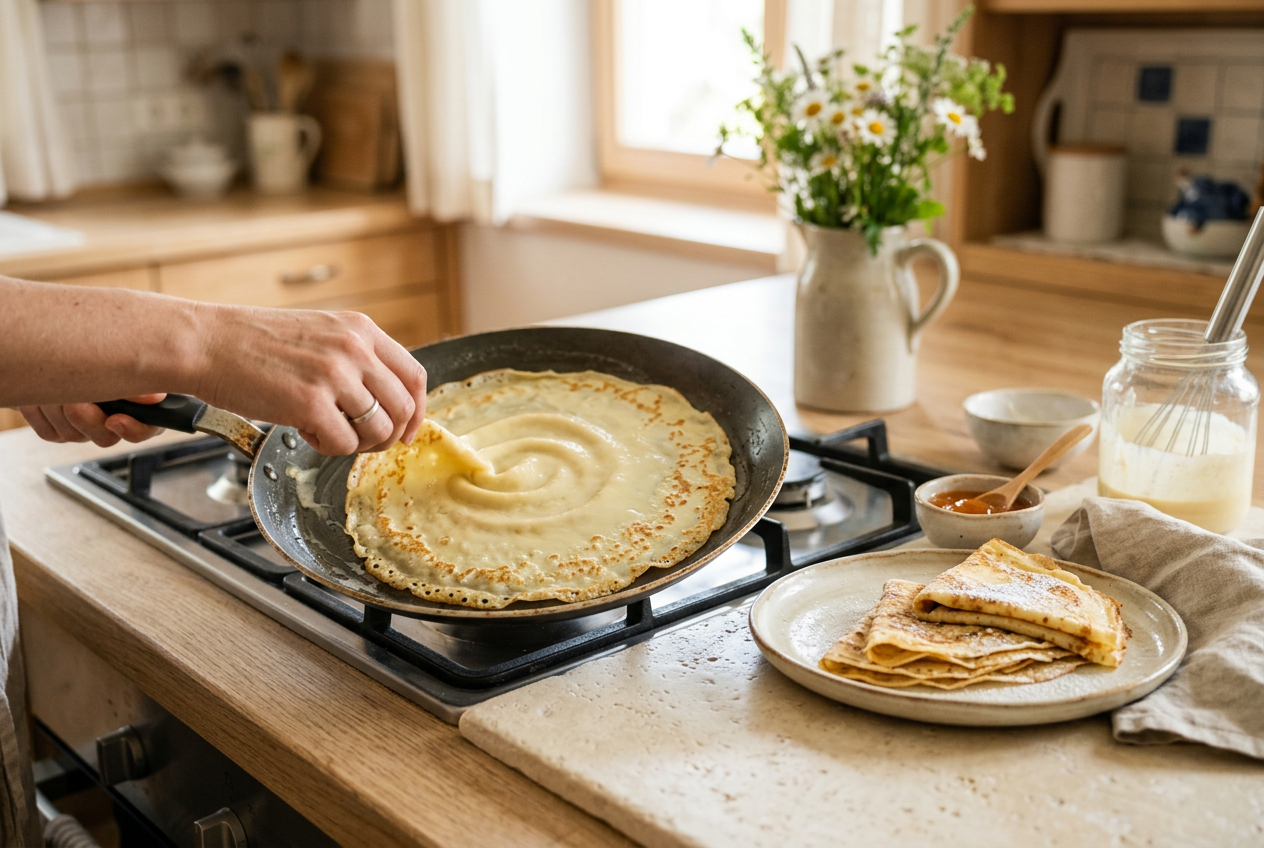
In Austrian cuisine, professionals always reach for fine smooth wheat flour. Smooth flour dissolves quickly in the liquid and ensures an even binding without any annoying lumps. Combined with fresh whole milk and fresh regional free-range eggs, it yields a thin batter that can be spread into a circle in the pan using a small ladle.
The most important step before frying the first one is patience. Never beat the eggs until foamy; simply whisk them smooth with the milk and flour. Afterwards, the batter must rest for at least 20 minutes at room temperature. During this resting period, the wheat starch granules swell completely and the gluten relaxes. Skipping this step results in Palatschinken that tear when rolled up or turn tough during subsequent baking in the oven.
Use a non-stick pan for frying and melt just a tiny touch of fine Austrian tea butter in it. Fry the Palatschinken over medium heat until only light golden. Since they bake again in the oven for about 25 minutes, Palatschinken fried too dark would become dry and leathery.

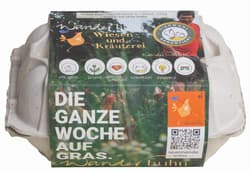
 Meadow and Herb Free-Range Mobile Coop Eggs M-L 6 pcs


The juicy curd cheese filling: Creamy, vanilla-scented, and never dry
The heart of every successful curd cheese pancake is its filling. A common mistake is using pure low-fat quark, which turns crumbly when baked. For that authentic Viennese taste, it takes the perfect balance of freshness, delicate richness, and light, airy structure.
It is best to use a combination of the finest curd cheese and creamy farmhouse curd. While the curd cheese with 20 percent fat content contributes a pleasantly fresh tang, the creamier farmhouse curd provides a velvety melt on the palate. If the curd appears watery after opening, let it drain briefly in a cloth or sieve so that the mixture does not become runny later on.
For that unmistakable aroma, beat room-temperature butter, egg yolks, fine sugar, and real Bourbon vanilla paste until pale and creamy. Finely grated organic lemon zest gives the filling the necessary freshness and balances the richness of the dairy products perfectly.
Prepare the rum raisins: Soak juicy raisins for at least two hours in a little genuine Austrian Inländer rum so they plump up and do not draw moisture from the curd during baking.
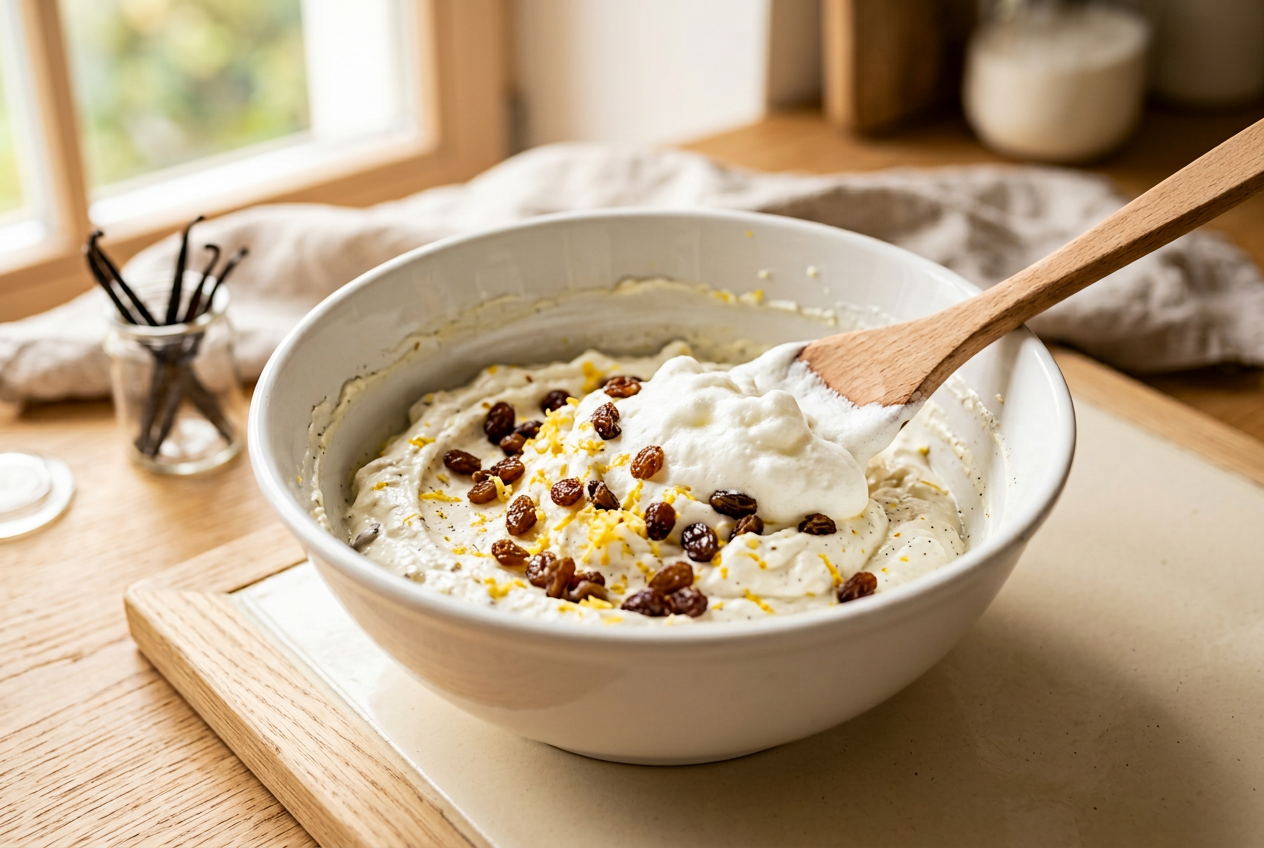
Gently fold in the whipped egg whites: Beat the egg whites with a small pinch of salt until stiff and glossy peaks form. Only fold the whipped egg whites gently into the curd mixture at the very end using a spatula.



The Imperial Cream Custard: The Soufflé Secret from the Oven
It is only the sour cream custard that transforms simple filled crêpes into the legendary Viennese casserole. As it sets in the oven and gently soufflés upward, a golden-brown crust forms, enveloping every single bite in creamy richness.
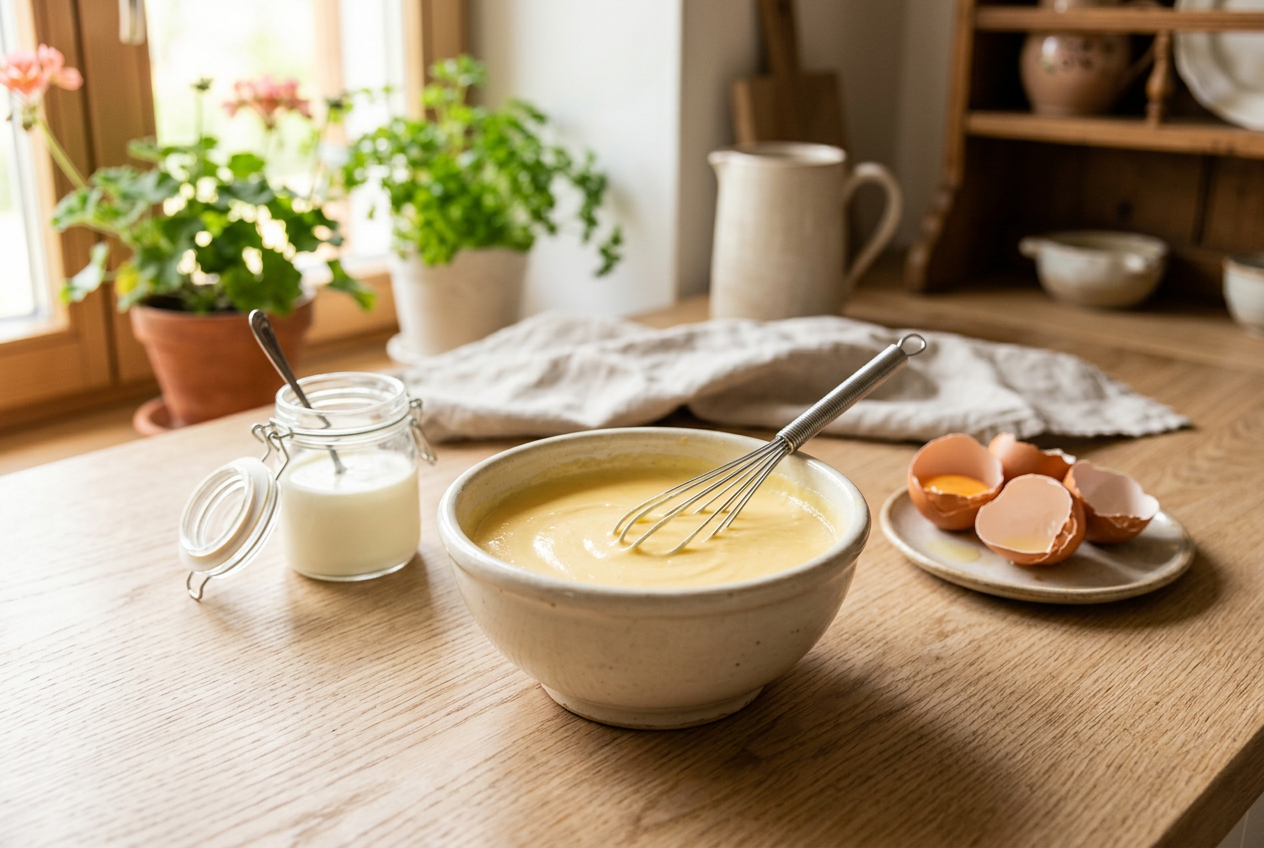
The base of this royal custard consists of fresh Austrian sour cream, liquid whipping cream, fresh egg yolks, a spoonful of granulated sugar, and real vanilla. The sour cream provides a delicate acidity that cuts through the richness of the sweet crêpes and creates a wonderful contrast to the dense curd cheese filling.
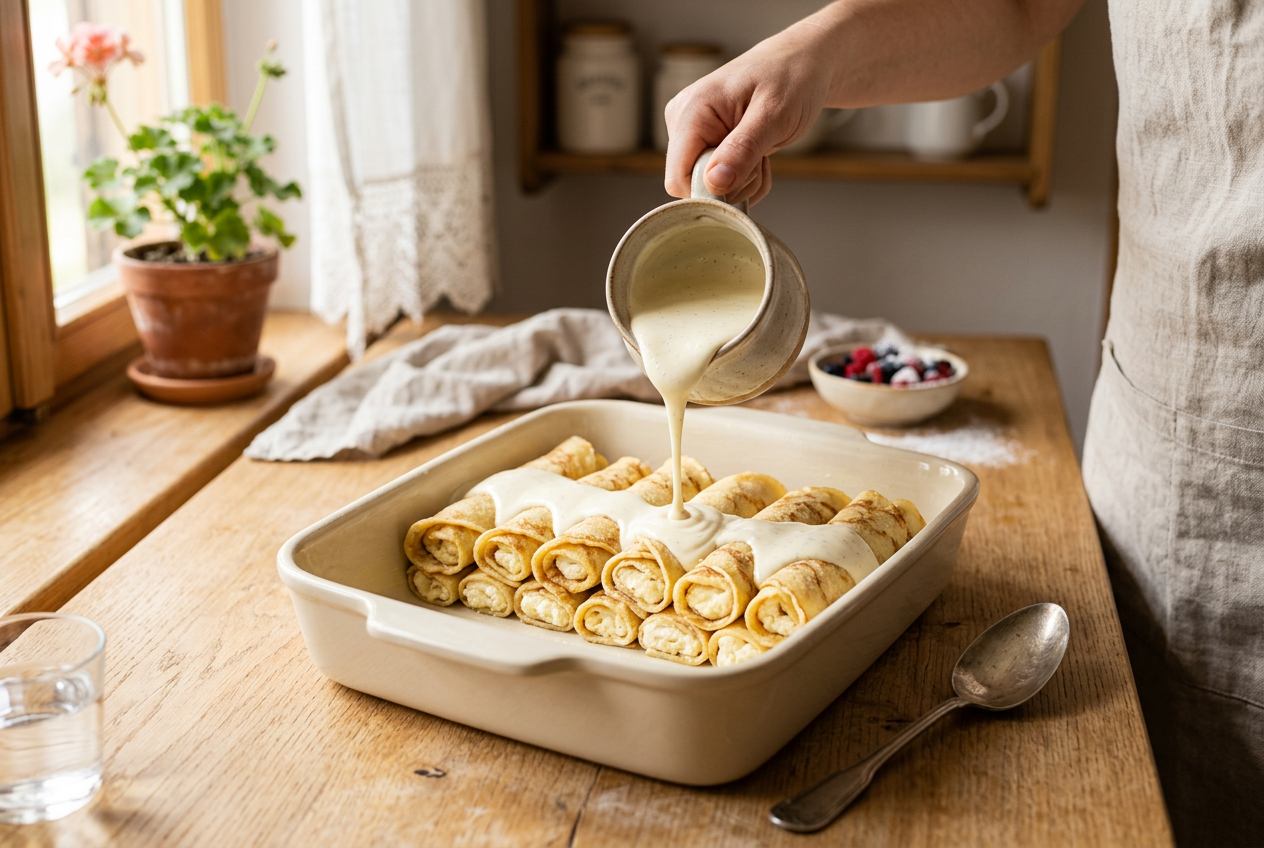
In Viennese coffeehouses, there are two popular methods for the custard topping. The traditional method pours half of the custard over the rolls before baking so the flavours can meld together. The second half is added after about 15 minutes of baking. This keeps the surface delicately glossy and guarantees it will not dry out.
The perfect sweetness is provided by fine granulated sugar in the custard and a delicate dusting of icing sugar immediately before serving at the coffee table.


Step by step into the oven: Layering, pouring, and baking
Once all components are ready, the harmonious assembly begins. With proper layering and the right oven settings, transforming the crêpes into a luscious festive bake succeeds in no time.
Generously grease an ovenproof ceramic or glass baking dish with soft butter. Sprinkling a little granulated sugar over the bottom provides a deliciously delicate caramel note.
Spread each Palatschinke evenly on the lighter side with two heaping tablespoons of curd cheese filling. Roll it up tightly and slice it diagonally across the middle. This creates the typical Viennese diagonal cut.
Place the halved rolls slightly overlapping like roof tiles into the dish, with the cut surfaces facing upward. This allows the sour cream topping to flow deep between the layers.
Preheat the oven to 180 degrees conventional top and bottom heat. Do not use convection, as the fan will dry out the Palatschinken. Bake the dish on the middle rack for 25 to 30 minutes until the crust rises golden yellow.
 55 min
 Under an hour