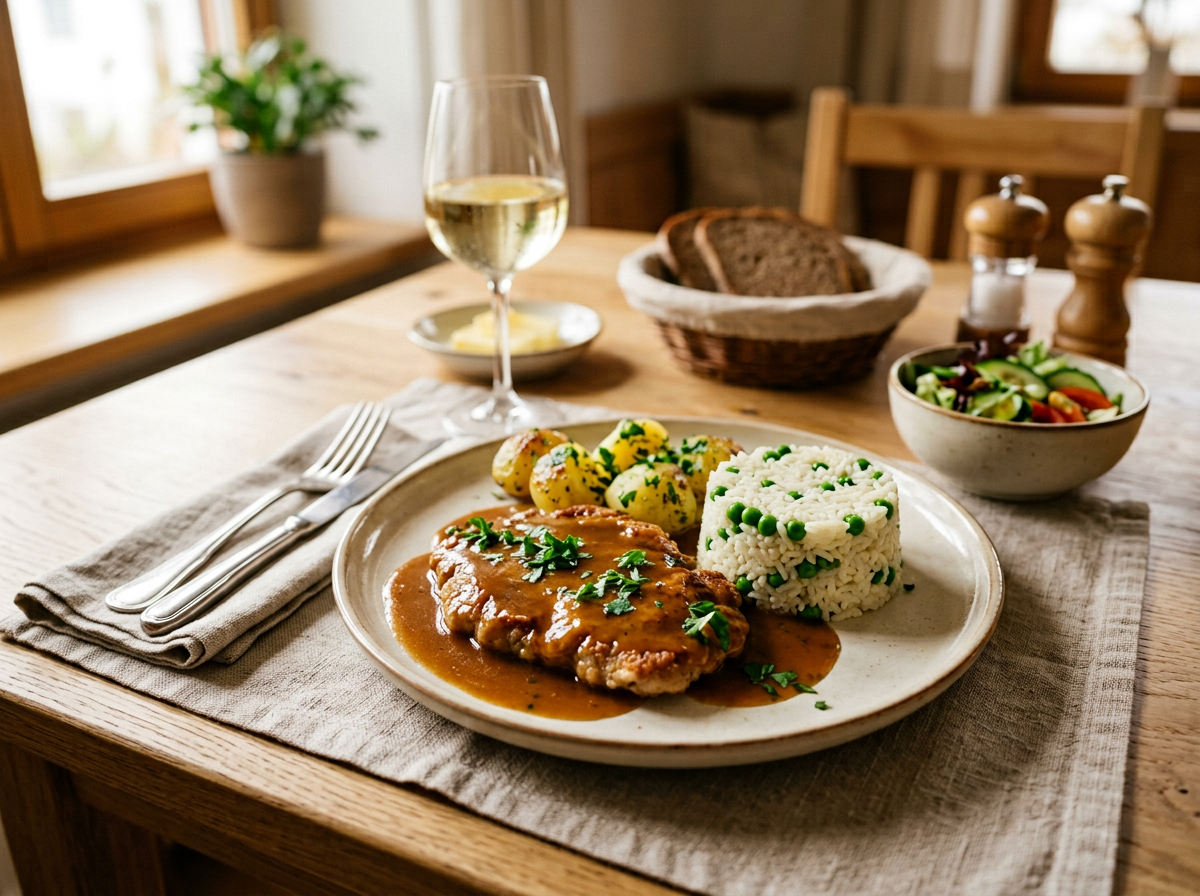
Naturschnitzel Recipe: Tender Schnitzel in Natural Gravy
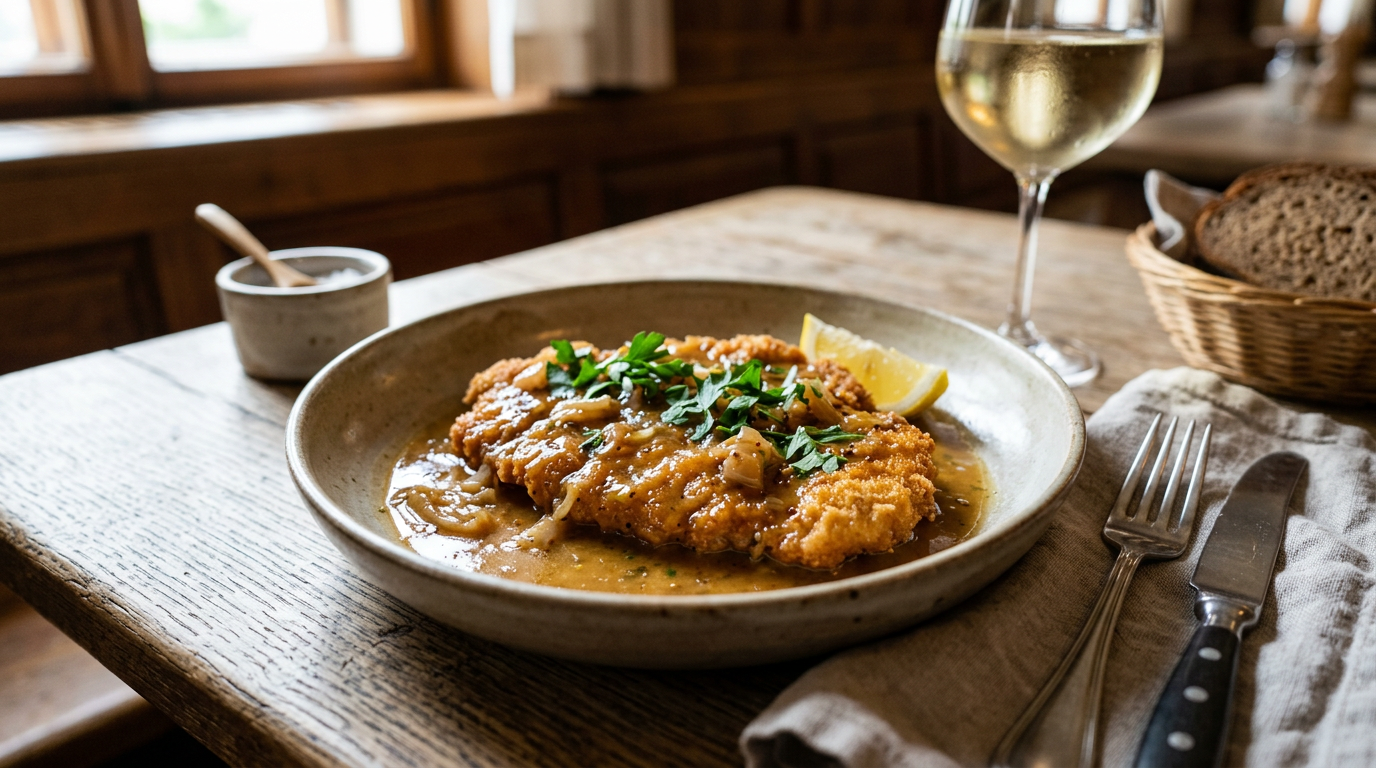
When the aroma of sizzling clarified butter, delicate browned onions, and rich roasting juices wafts through the parlour of a traditional Austrian tavern, one particular dish is almost certainly on the stove: Naturschnitzel in pan sauce. Unlike its famous breaded counterpart, this tavern classic does completely without a breadcrumb coating. Here, pure meat quality, tender texture, and an aromatic, golden-brown pan sauce take center stage. Whether prepared from fine veal or the best local pork: with a few simple tricks, you can make this soul food at home so melt-in-the-mouth tender that you can practically cut the meat with a fork.
The Foundation: Veal or Pork for Perfect Flavour
A Naturschnitzel thrives on the purity of its ingredients, as no breadcrumb coating hides any flaws in the cut. Paying attention to top-quality meat origin and the right cut lays the foundation for juicy success before the stove is even turned on.
Which meat works best?
In upscale Viennese cuisine, veal schnitzel is the undisputed favourite. Cuts from the veal category such as topside, knuckle, or eye of round are particularly fine-grained, mild in flavour, and literally melt on the tongue when prepared properly.
For that hearty, rustic tavern feel, people in Austria traditionally turn to fresh pork from high-welfare farming. Schnitzels from pork topside or Kaiserteil retain their juicy bite during a brief simmer in the pan juices and naturally bring a fine, savoury flavour. What is important for both options: the meat should be cut to an even thickness and allowed to come to room temperature before frying.

 AMA Veal Rosé Austria Schnitzel sliced


The kitchen secret: Gently flatten and flour on one side
Why does a Naturschnitzel at a tavern turn out so wonderfully tender, while at home it sometimes ends up tough or dry? The secret lies in two crucial preparation steps that take hardly any time, but make all the difference on the plate.
Gentle flattening
Never batter meat slices with the ridged side of the mallet. Place cling film over the meat and gently flatten it with a heavy meat pounder or the bottom of a pot to about 5 to 6 millimetres.
Score the edges
Use a sharp knife to make two to three cuts, about half a centimetre deep, into the tendons along the edge of the meat. This ensures that the schnitzel does not curl up during searing and maintains full contact with the hot bottom of the pan.
Flour on one side
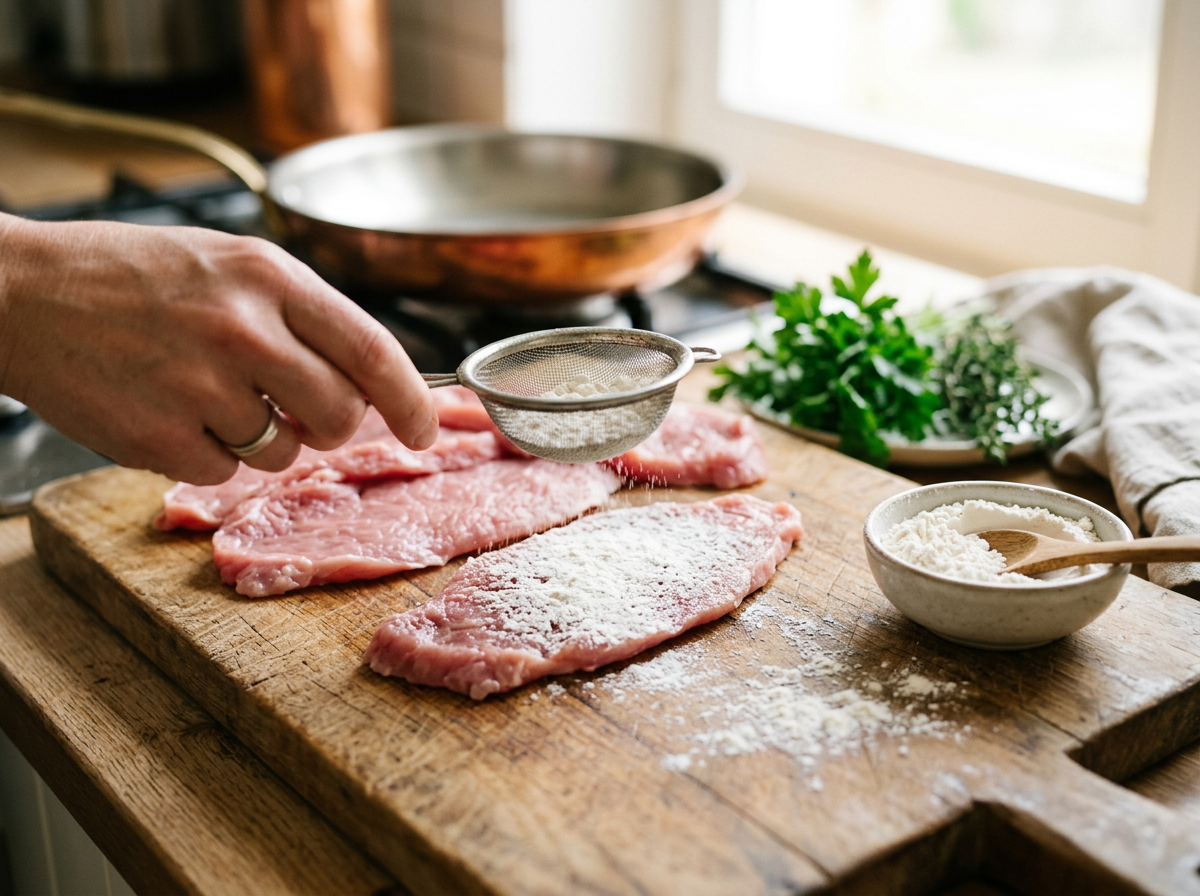
Season both sides with salt and freshly ground pepper. Then gently press only a single side into smooth wheat flour and tap off any excess. This layer of flour protects the meat and magically thickens the pan drippings.
In the Pan: Hot Searing in Nutty Clarified Butter
For an authentic aroma, there are no compromises in Austrian cuisine: frying is done in clarified butter or ghee. It tolerates high heat without burning and gives the meat crust that characteristic, delicate buttery note.
The Golden Heat Rule
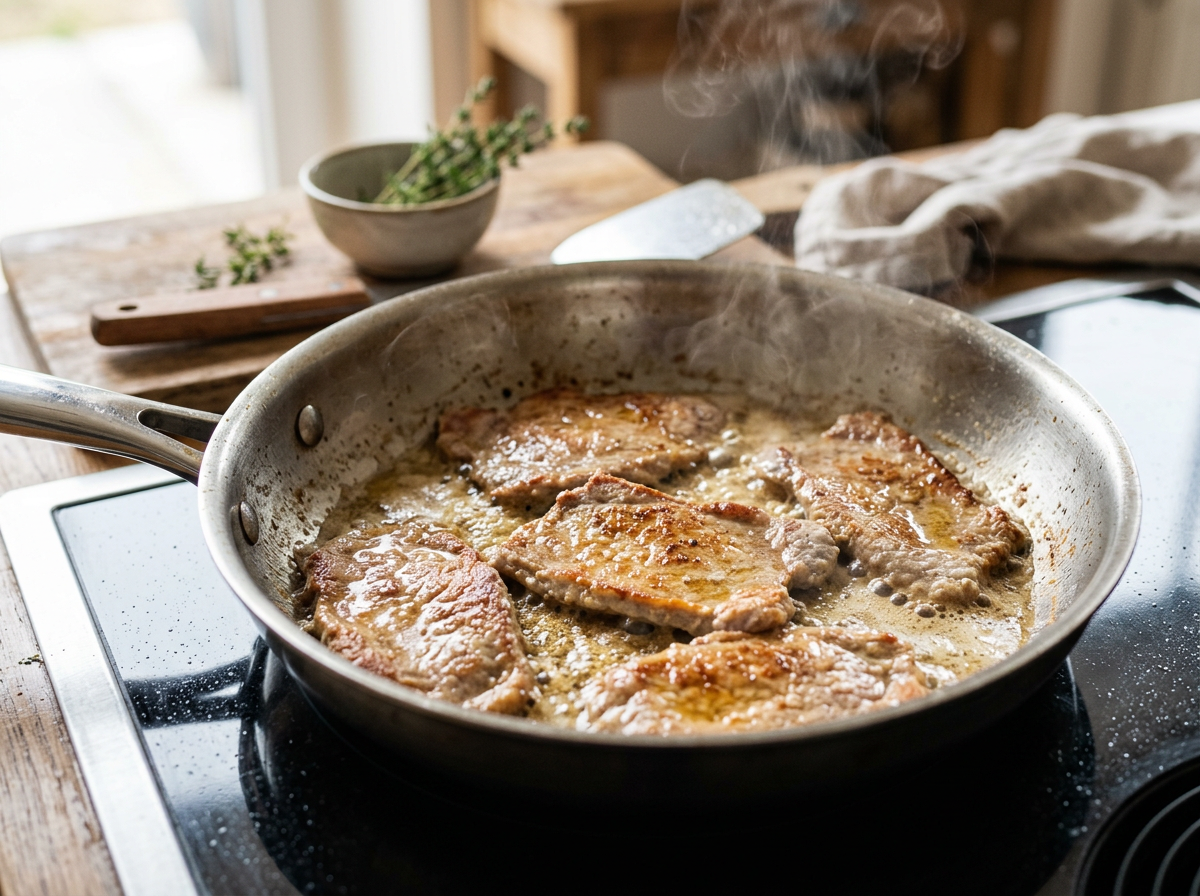
Heat plenty of clarified butter in a heavy iron or stainless steel pan. Place the schnitzels into the sizzling fat with the floured side down first. Now, keep calm! Over high heat, the schnitzel takes about 1.5 to 2 minutes until the underside takes on a lovely golden-brown color.
Turn the meat and sear the second side for a maximum of 1 minute as well. Remove the schnitzels immediately and set them aside on a warm plate. They do not need to be cooked through at all, as they will experience their grand finale shortly during gentle simmering in the sauce.
Important: Never overcrowd the pan! For four portions, it is better to fry in two batches. Otherwise, the temperature drops, meat juices escape uncontrollably, and the meat boils instead of frying.


The Legendary Natursaftl: Deglazing, Reducing, Mounting
The highlight of every tavern-style Naturschnitzel is its sauce. It is created directly from the delicious pan drippings, rounded off with the acidity of a good white wine and the depth of genuine beef broth.
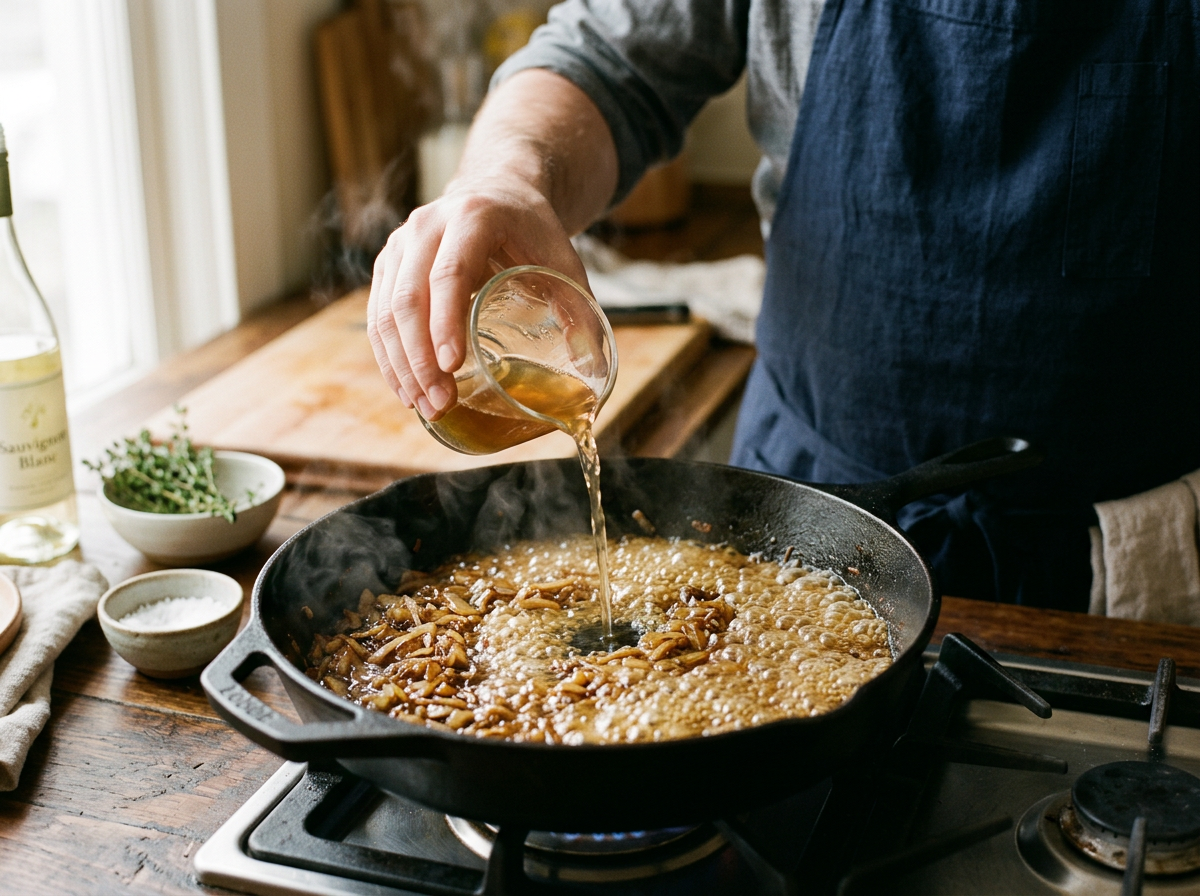
Step by step to the perfect pan sauce:
1. Sautéing onions & mustard: If needed, add another spoonful of clarified butter to the pan. Slowly sauté a finely chopped onion in it until golden yellow. Stir in a teaspoon of tarragon or Kremser mustard and let it braise briefly with the onions; this adds wonderful flavour.
2. Deglazing with white wine: Deglaze the pan drippings with a generous splash of dry Austrian white wine (preferably Grüner Veltliner). Carefully scrape up the aromatic browned bits from the bottom with a wooden spatula and let the wine reduce by two-thirds.
3. Pouring in broth & braising: Pour in about 250 ml of hot beef broth. Return the pre-seared schnitzels along with any released meat juices to the pan. Place the lid on and let simmer gently over the lowest heat for about 8 to 12 minutes.
4. Mounting with butter: Remove the schnitzels. Turn off the heat and briskly stir one to two pieces of ice-cold butter into the gently simmering sauce. The butter emulsifies the pan sauce into a smooth, velvety, glossy sauce.


Classic side dishes: From whipped butter rice to boiled potatoes
A true Naturschnitzel needs a side dish that eagerly soaks up the fine pan juices. In Austria's traditional taverns, there are two definitive accompaniments that truly complete the dish.
Butter rice & Risi-Bisi
Tender, fluffy long-grain or basmati rice from the Rice category, braised in a little butter and refined with young green peas, is arguably the most popular side dish for Naturschnitzel. The grains of rice absorb the natural pan juices perfectly.
Parsley potatoes & green beans
Waxy Austrian potatoes cooked in salted water, peeled, and then tossed in foaming butter with fresh parsley. If you like, serve with crisp, blanched green beans (Bohnschoten), which bring freshness and colour to the plate.