
Classic roast St. Martin's goose: Crispy & juicy
When the days grow shorter in late autumn and the aroma of roasted marjoram, juicy baked apples, and crispy poultry wafts through the house, the most wonderful culinary season of the year begins in Austria: goose season around St. Martin's Day on November 11. A traditional St. Martin's goose is no ordinary Sunday meal, but a true feast for family and friends, celebrated with patience, love, and the finest regional ingredients.
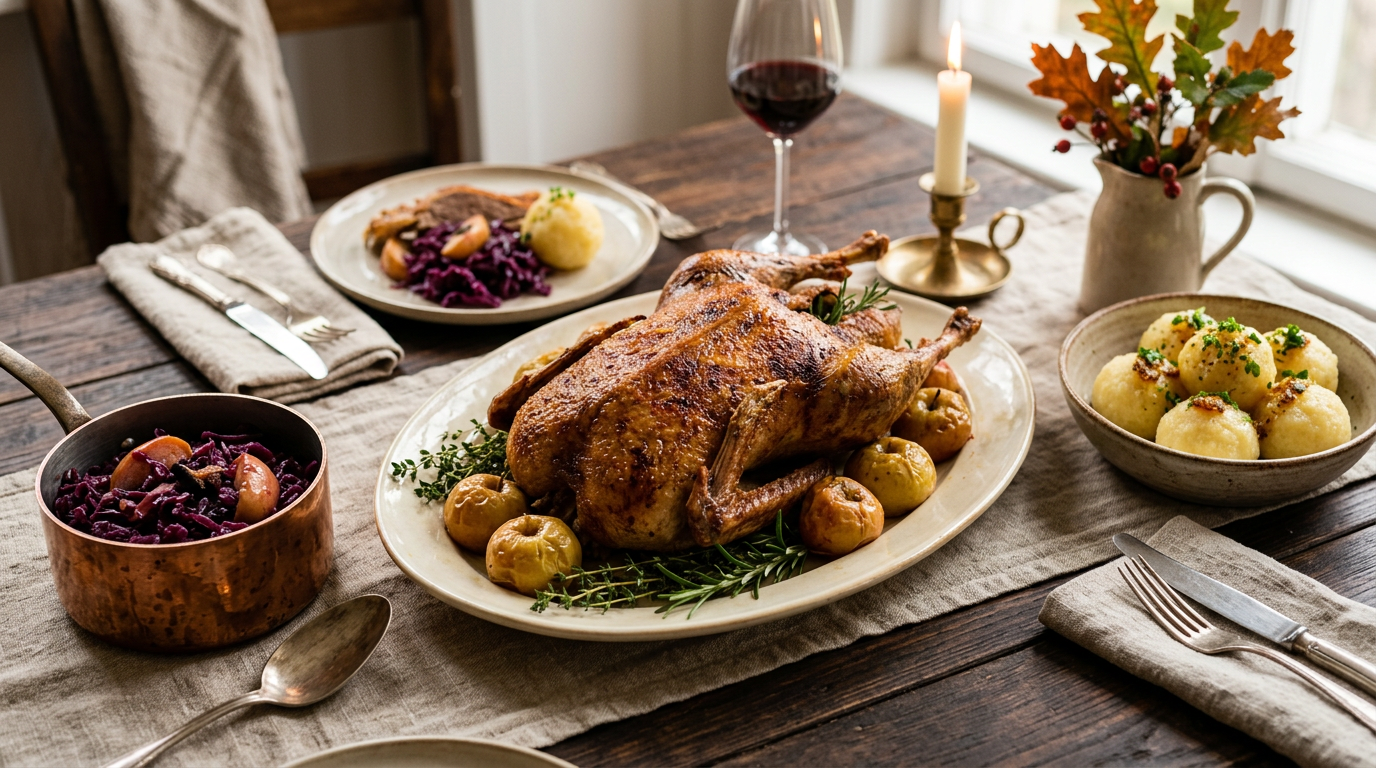
Many home cooks are intimidated by preparing a whole goose: Will the meat turn out dry? Will the skin end up tough instead of crispy? And how do you get the sauce velvety without it swimming in fat?
We'll take away all your worries. In this guide, you will learn step by step how to make your roast goose in the oven an unbeatable success: sensationally crispy on the outside, juicy and tender on the inside. Plus, we'll show you the perfect accompaniments, from classic apple red cabbage to fluffy potato dumplings, complete with convenient online ordering of all ingredients delivered straight to your doorstep.
1. The Goose: Origin, Pasture Rearing, and the Right Size
The secret to an unforgettable roast goose doesn't begin in the roasting pan, but out on the pasture. Meat quality, fat distribution, and the incomparable meat aroma directly depend on how the animals were raised. Anyone who has tasted a genuine Austrian pasture-raised goose will immediately taste the huge difference compared to industrial mass-produced poultry.
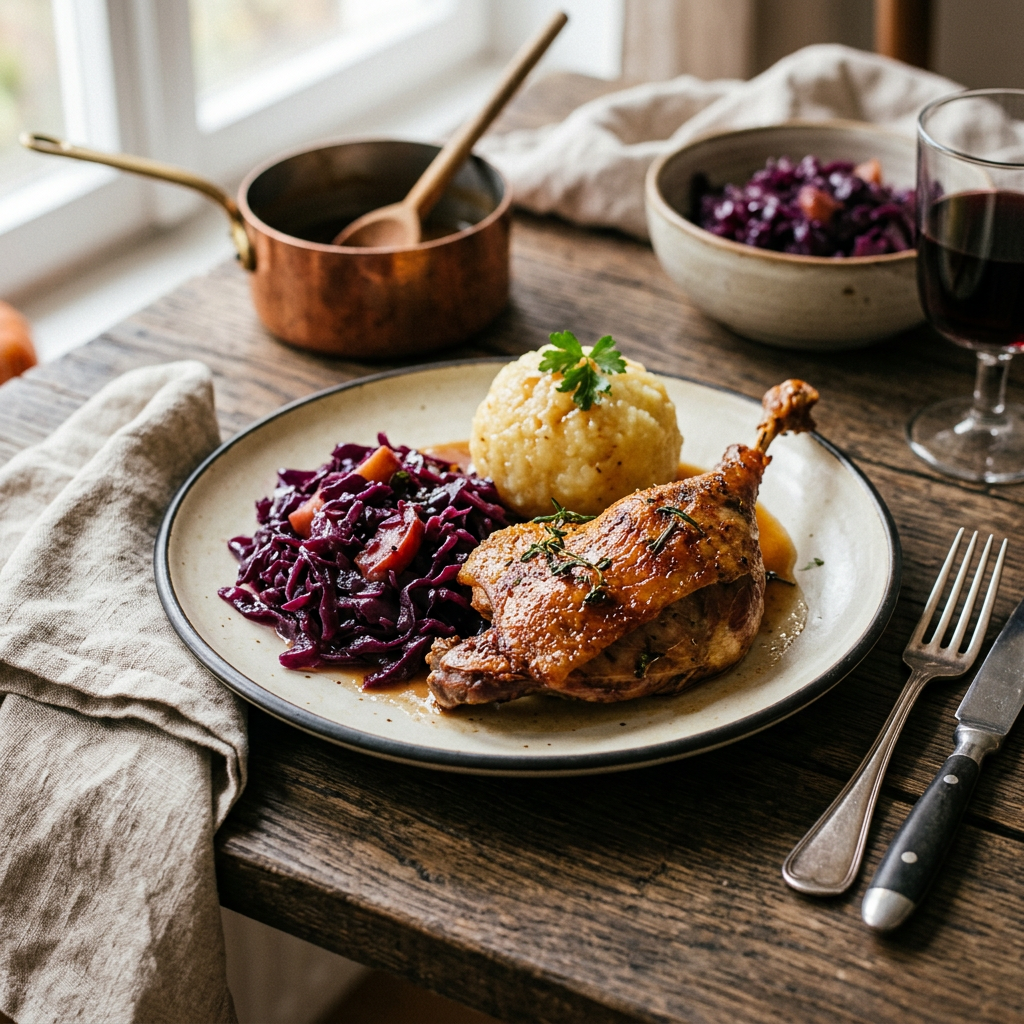
Geese are demanding grazing animals that need plenty of lush grass, fresh herbs, and ample space to roam in the open air. Thanks to continuous movement, pasture-raised geese store their fat harmoniously between muscle fibers instead of merely building up thick layers of subcutaneous fat. During slow roasting in the oven, the meat stays incredibly juicy and retains a firm, aromatic texture.
At Gurkerl, you will find first-class specialties such as the popular meineWeideGans leg sous vide from regional Lower Austrian farming, as well as the finest fresh and frozen festive poultry in the Whole Poultry category.
How much goose per person?
A goose has a heavy bone structure and renders a substantial amount of fat during roasting. As a rule of thumb, allow for around 800 g to 1 kg of raw weight per guest. A classic goose weighing 4 to 4.5 kg is ideal for 4 to 5 hungry diners.
Gentle Thawing
If you choose a frozen goose, make sure to thaw it slowly in the refrigerator. A 4 kg bird requires about 36 to 48 hours. Never thaw at room temperature or in warm water to ensure the meat fibers remain juicy.
Trimming & Washing
Remove the bag of giblets from the cavity; save the heart, gizzard, and liver for the stuffing or sauce. Rinse the goose inside and out with cold water, pat thoroughly dry with paper towels, and trim off excess tail fat.
 meineWeideGans leg of goose sous vide

2. The Art of Stuffing: Apples, Chestnuts, and Marjoram
In traditional Austrian tavern cuisine, a St. Martin's goose is rarely roasted empty. The stuffing serves a fundamental purpose: as it roasts for several hours, it gently releases moisture from the inside into the breast meat, keeping the goose juicy while infusing the roasting juices with enticing autumn aromas.
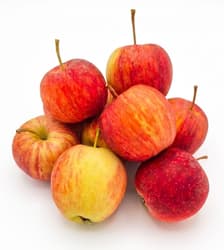
The classic stuffing is based on tart apples, chopped onions, dried or fresh marjoram, and whole caraway seeds. Apples such as Boskoop or Granny Smith provide natural acidity that harmoniously balances the rich goose fat. Pre-cooked chestnuts (maroni) add an elegant festive touch, as recommended in the official Gurkerl Roast Goose Recipe.
Marjoram is the signature spice of Austrian goose culture. Its essential oils make the rich meat easier to digest and give the crispy skin that unmistakable aroma that instantly evokes memories of cozy taverns.
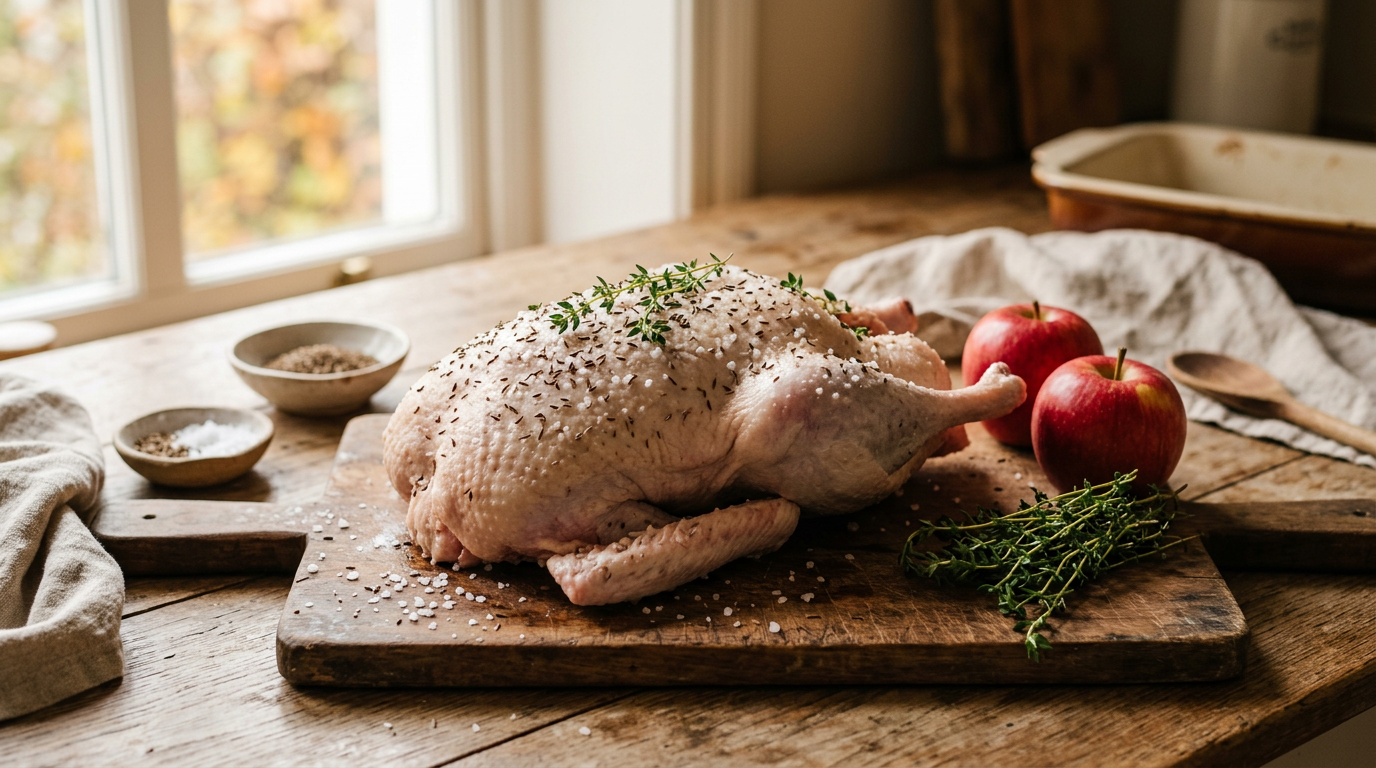
Rub the seasonings in thoroughly
Rub the goose generously inside and out with plenty of coarse sea salt and dried marjoram. Inside, you can also add a pinch of black pepper and crushed caraway seeds. The salt draws moisture from the skin, ensuring it crisps up beautifully in the oven.
Dice & mix the aromatics
Chop 3 unpeeled tart apples and 2 yellow onions into coarse pieces. Mix them with 150 g of pre-cooked chestnuts (maroni), a little fresh thyme, and the chopped giblets (heart and gizzard).
Stuff loosely & secure
Spoon the stuffing loosely into the cavity. Important: Do not pack it too tightly, so that the hot air can circulate and the goose cooks through evenly. Secure the opening with kitchen twine or wooden skewers (roulade needles). You can tie the wing tips to the body with some twine.
3. In the oven: Temperature, patience and legendary crispy skin
When roasting goose, patience is king. A common mistake is using heat that is too high right from the start: the meat dries out before the connective tissue melts and softens. With our proven two-phase method, the goose turns out reliably juicy and develops a crust in the last 25 minutes that crunches wonderfully when carved.
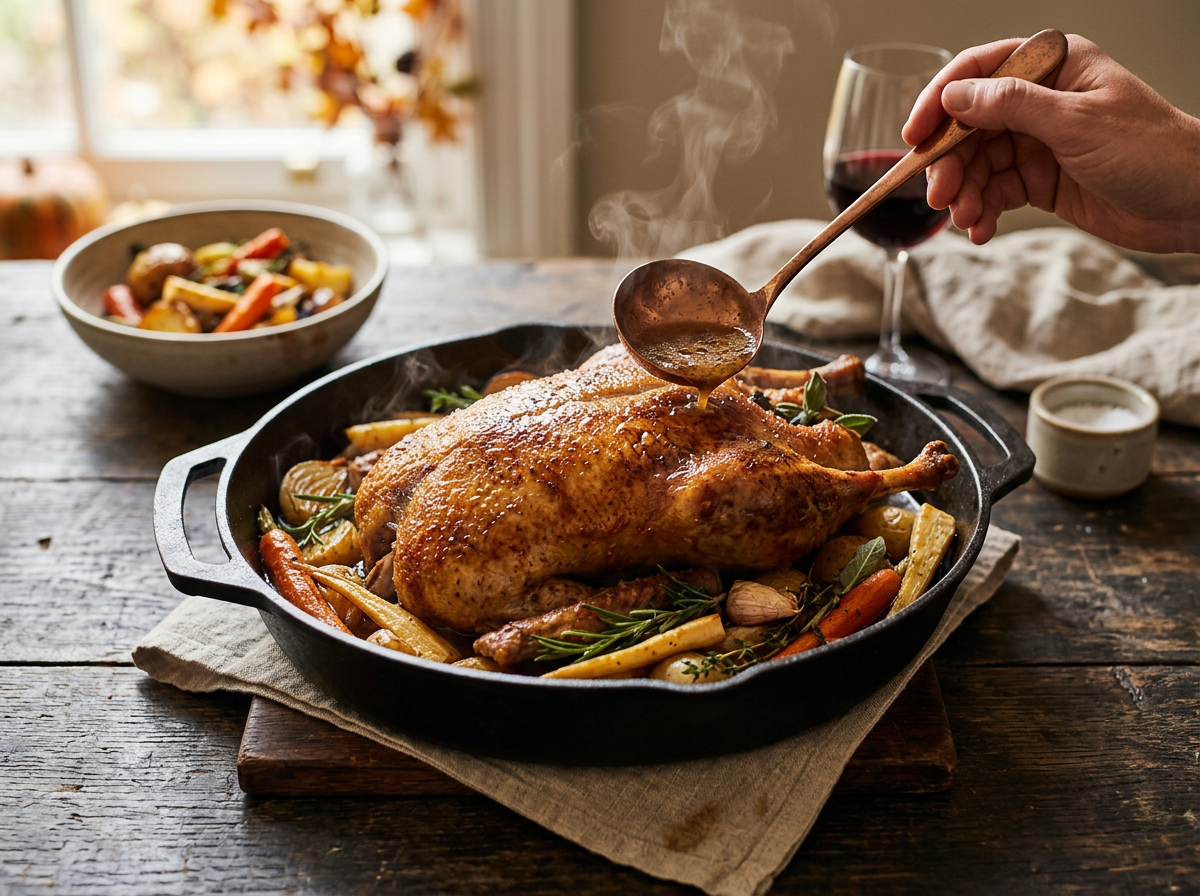
Phase 1: Gentle roasting (160 °C top/bottom heat)
Pour about two fingers' width of boiling water into a large roasting pan or dripping pan. Place the goose in it breast-side down first. At 160 °C, the goose roasts for about 50 to 60 minutes per kilogram of weight. A 4 kg goose therefore takes around 3.5 hours.
After 90 minutes, carefully turn the roast over so that the breast side faces up. Using a sharp meat fork or a toothpick, gently prick the skin under the legs and wings at an angle. This allows the rendered fat to escape without piercing the muscle meat. Baste the goose every 30 minutes with the rendered pan juices.
The pro trick for sensational crispiness
Phase 2: The crispy finish (220 °C grill/top heat)
In the last 20 to 25 minutes, increase the oven temperature to 220 °C. Now stop basting with pan juices, as moisture softens the skin. Instead, mix 2 tablespoons of ice-cold water with 1 teaspoon of sea salt (optionally with half a teaspoon of honey) and brush the skin very thinly with it. The cold salt water causes the tiny fat pores to pop abruptly, transforming the goose skin into a golden-brown, blistered, wonderful crust. The core temperature in the thickest part of the leg should reach 82 to 85 °C at the end.

 285 min


