
What is Kritharaki? Greek Orzo Pasta
They look like grains of rice, taste like the finest Italian pasta, and are at the heart of Greek family cooking. Kritharaki combine the best of two culinary worlds: they absorb rich sauces like risotto rice while keeping the perfect al dente bite of pasta. Dive with us into the secrets of this wonderful little pasta.
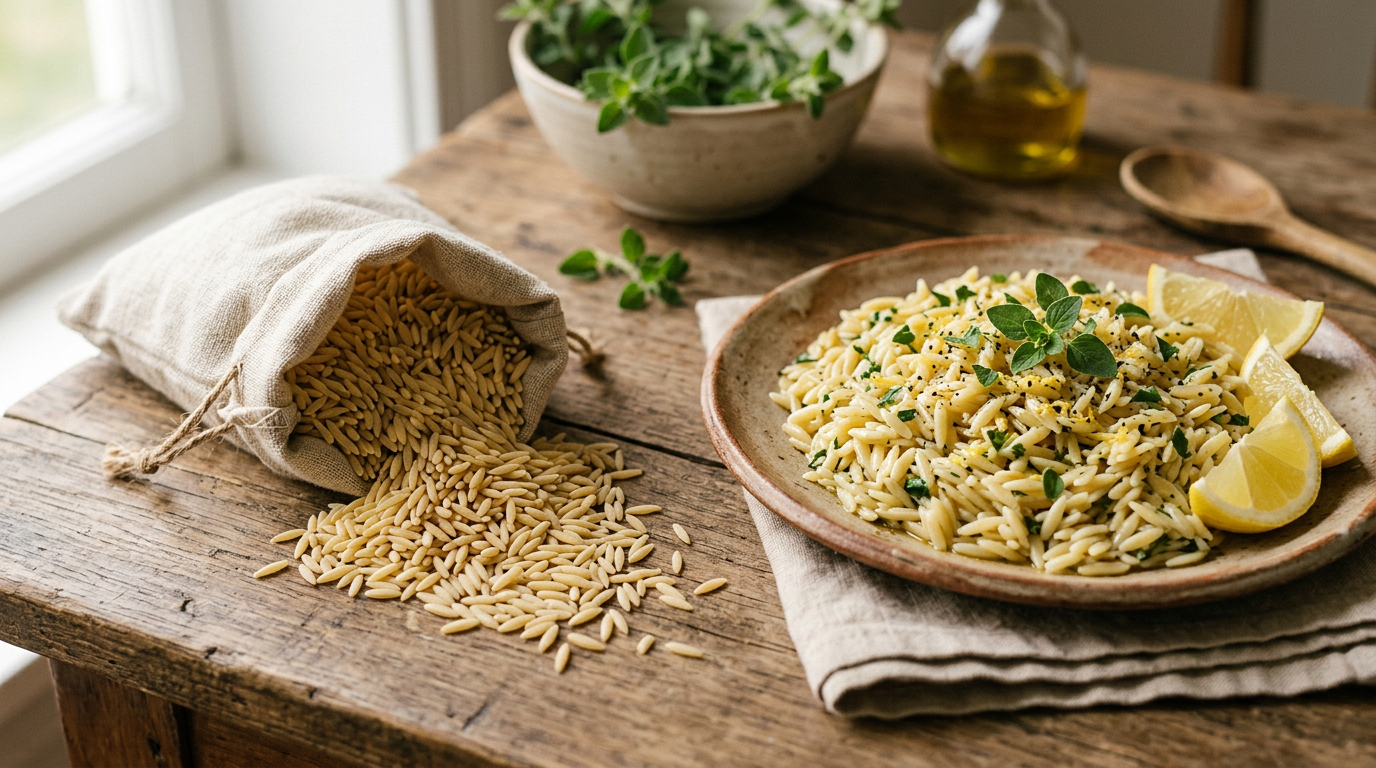
What makes kritharaki so special: The chameleon of Mediterranean cuisine
Anyone taking a first glance at these small, gently curved oval grains will almost inevitably guess long-grain rice. But appearances are delightfully deceiving.
Kritharaki are made from high-quality durum wheat semolina and water. They are real pasta, shaped like barley grains. That is precisely where their Greek name comes from: krithari means barley. In Italy, in turn, the same pasta is called orzo (also barley) or risoni (large grain of rice). Whether in Greek village taverns or Italian trattorias, this small pasta has had a firm place at the heart of Mediterranean food culture for centuries. An excellent choice for your kitchen is the classic Marks & Spencer Orzo Pasta, crafted from sun-drenched durum wheat in the Italian Alps. If you want to stock your pantry with premium pasta, it is always worth taking a look at our extensive selection of the finest pasta.
What makes kritharaki so ingenious is their fascinating ability to blend completely with any sauce. While classic spaghetti or penne merely coat the sauce, kritharaki literally absorb the flavours into their core without turning mushy. The result is an incomparably luscious mouthfeel that is otherwise only known from risotto stirred for hours.
Texture to the very end
Thanks to pure durum wheat semolina, the pasta retains its pleasant al dente bite even when simmered for a long time in hot braising juices or rich broth.
Maximum absorbency
During cooking, the delicate surface starch blends perfectly with stocks, tomato sauces, and melted cheese into a wonderfully creamy texture.
Boundless versatility
From rustic oven-baked casseroles to creamy kritharotto, through to light, refreshing summer salads with cucumber and sheep's cheese, kritharaki is a perfect fit for any season.


The Secret of Toasting: From Nutty Aroma to Perfect Texture
Anyone who simply tosses kritharaki into boiling water like ordinary penne misses out on their greatest culinary potential. The true kitchen secret of Greek grandmothers begins in the hot pan.
Before liquid comes into play, the dry pasta is briefly heated dry or with a tablespoon of cold-pressed oil. Through this gentle toasting, the durum wheat unfolds delicate roasted aromas reminiscent of toasted hazelnuts and freshly baked white bread. At the same time, the outer pores of the pasta close slightly. This ensures that the pasta retains its shape during subsequent cooking and does not stick together. A fruity, aromatic oil is essential for this technique: discover our exquisite olive oil, which lends your dishes an authentic, sunny Mediterranean touch.
Sauté finely chopped onions and a clove of fresh garlic in premium olive oil, then add the uncooked kritharaki and stir for two minutes over medium heat until the grains become slightly translucent. Only then deglaze with a splash of dry white wine or aromatic vegetable broth. The difference in the finished dish is incredible.
Gently heat the oil
Heat two tablespoons of extra virgin olive oil in a wide pan over medium heat. Make sure the oil does not smoke.
Toss the grains until golden
Add the raw kritharaki. Stir them continuously with a wooden spoon for about 2 to 3 minutes until they release a nutty aroma.
Deglaze with a sizzle
Pour in hot broth or strained tomatoes in batches. The sizzle on first contact seals in the flavor and begins the gentle cooking process.


Kritharotto & One-Pot Wonders: Creamy Comfort from a Single Pan
Risotto is wonderful, but requires patience and almost constant stirring. Kritharotto delivers the same luxurious creaminess in half the cooking time.
The word kritharotto is a blend of kritharaki and risotto. The principle is remarkably simple: the pasta cooks directly in the sauce or broth instead of being boiled separately in salted water. During cooking, the durum wheat continuously releases fine starches into the surrounding liquid, creating a velvety, rich consistency without adding any heavy cream.
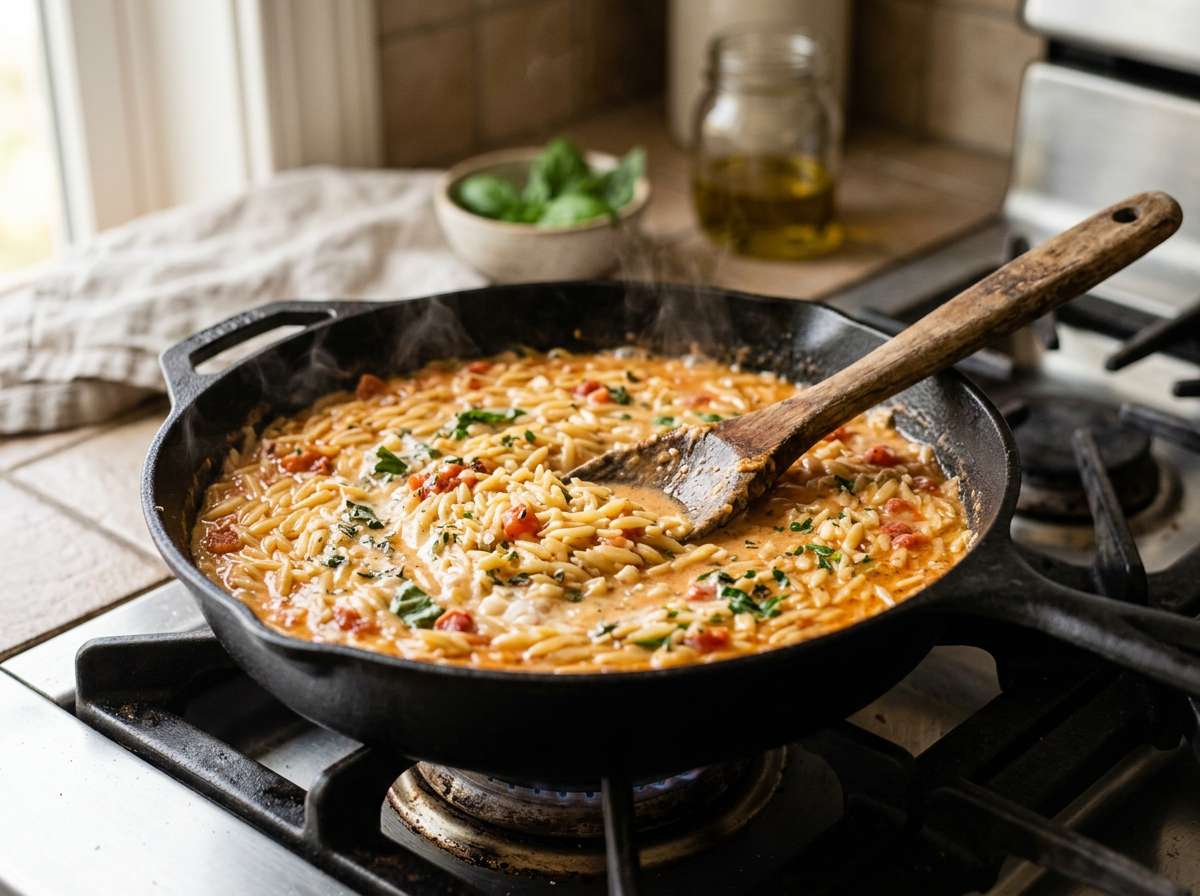
Ready to enjoy in 15 minutes
For a classic kritharotto, count on about 600 to 700 millilitres of liquid consisting of vegetable stock and diced tomatoes for every 200 grams of kritharaki. Cover with a lid and let everything simmer gently over low heat for about 12 to 14 minutes. Stir every few minutes so nothing sticks to the bottom of the pan.
Just before serving, remove the pan from the heat and fold in cold flakes of butter, freshly grated sheep's cheese or Parmesan, and plenty of fresh herbs such as basil, thyme, or oregano. Leave the lid on for another two minutes. The result is pure, velvety comfort.
Oven-Baked Giouvetsi: The Undisputed King of Greek Sundays
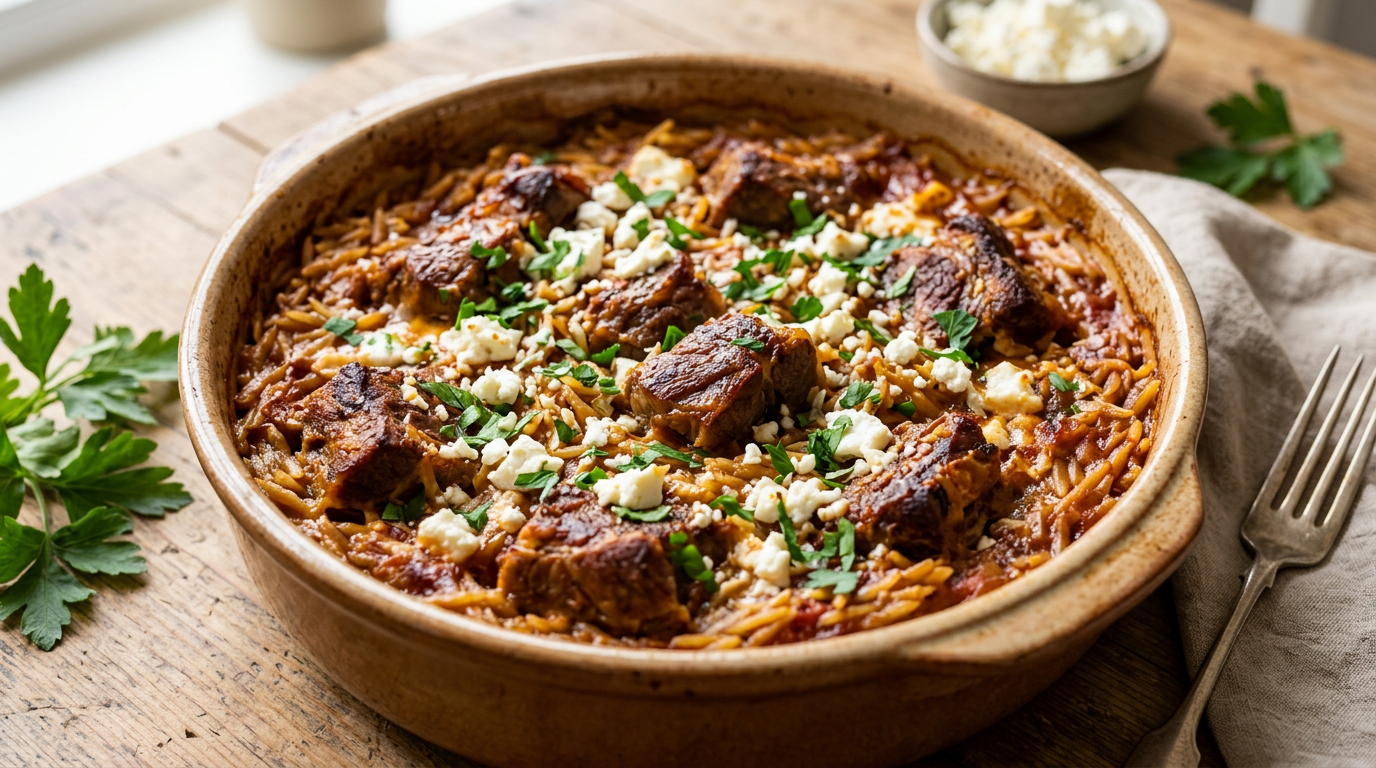
When the aroma of roasted lamb, rich tomatoes, fine cinnamon, and sun-dried oregano fills the house, Giouvetsi is traditionally served on the table in Greece.
Giouvetsi (also known as Youvetsi) is the epitome of Greek festive cuisine. Tender pieces of lamb or beef are browned thoroughly with onions, garlic, and tomato paste, deglazed with red wine, and braised until butter-soft in a deep baking dish or a traditional clay pot in the oven. Only in the last half hour is the uncooked kritharaki pasta added directly to the hot braising liquid.
A Feast for Family & Friends
The pasta cooks in the oven at 180 degrees conventional heat, soaking up the full, rich meat juices. Finally, original Greek sheep's milk cheese is generously crumbled on top. If you want to cook this culinary masterpiece yourself, follow our step-by-step recipe for Greek Lamb Giouvetsi. Authentic Greek Feta, Sheep's & Goat's Cheese provides that incomparably savory flavor, melting slightly and gratinating to golden perfection in the oven.
Giouvetsi also turns out fantastic as a vegetarian dish: With roasted eggplant, sweet bell pepper pieces, zucchini, and fruity tomato sauce, this oven-baked pasta becomes a wonderfully aromatic comfort food for meat-free enjoyment.


Fresh, colorful, and crisp: Kritharaki in a summery pasta salad
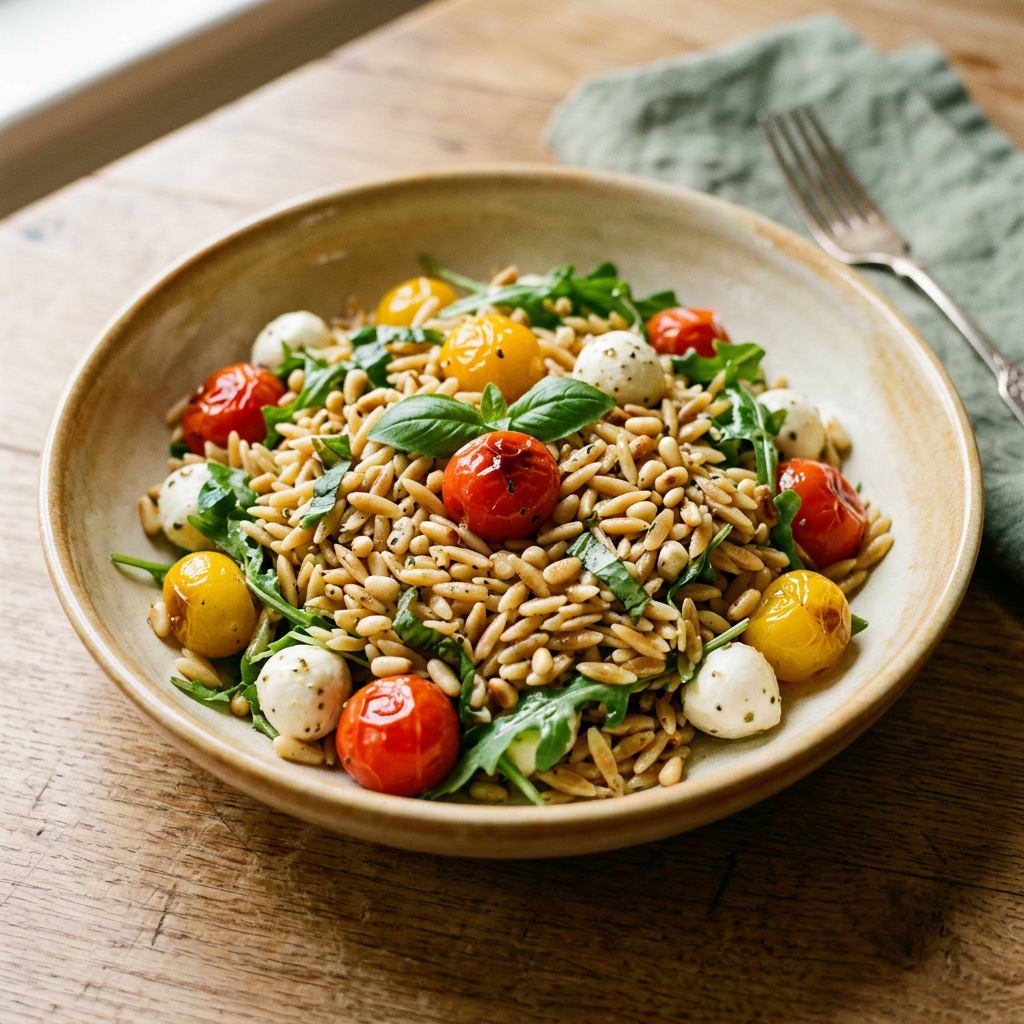
When the days warm up and heavy sauces take a break, kritharaki reveals its second talent as the star of fresh, aromatic pasta salads.
Classic pasta salads made with macaroni or penne often feel heavy or dry out quickly in the fridge. Kritharaki, on the other hand, maintains a wonderfully tender, light texture thanks to its compact rice-grain shape. It marinates beautifully with crisp vegetables and absorbs dressings based on lemon, garlic, and the finest olive oil perfectly.
The anti-stick trick for salads
Cook kritharaki in plenty of salted water for exactly 8 to 9 minutes until al dente. Drain in a fine-mesh sieve and rinse very briefly with cold water to stop the cooking process immediately. Then drizzle with a tablespoon of olive oil right away and stir gently. This keeps every single grain separate and smooth.
For the perfect summery combination, mix the cooled pasta with crunchy cucumber pieces, sun-ripened tomatoes, black Kalamata olives, red onion rings, fresh mint, and creamy feta. Try our foolproof recipe for Greek Orzo Salad, which is also ideal for preparing ahead for the office or your next barbecue.